I Ate at Jiro's Sushi Restaurant — Here's How I Got In and What It Was Like
Most of you have probably seen the documentary Jiro Dreams of Sushi. If you haven’t, stop reading and go watch it. It tells the story of Jiro Ono, one of the greatest sushi chefs in the world — three Michelin stars, a tiny 10-seat counter in a Tokyo subway station, and an obsession with perfection that borders on madness.
After watching that film, I made a promise to myself: if I ever go to Japan, I’m eating there.
Getting a Reservation
This was the hardest part. Sukiyabashi Jiro only has 10 seats, and you need to book at least a month in advance. The catch: the reservation has to be made in Japanese, by a Japanese speaker, on your behalf. If you miss the appointment, the person who booked it pays a ¥10,000 ($100) cancellation fee. That’s why nobody wants to help you.
I made countless phone calls to concierges and hotels. None of them would do it — the liability was too much. I nearly gave up.
Then I figured it out. Book a room at an expensive hotel. Not a hostel, not a budget place — somewhere like the Ritz-Carlton. Their concierge will make the reservation for you because you’re a paying guest at a premium property. That was the trick.
Once I had the confirmation, I booked my flight to Japan.
The Location
Jiro has two locations — the original in Ginza (where Jiro himself works) and a second in Roppongi Hills (run by his younger son, Ono Takashi). If you don’t speak Japanese, they’ll typically send you to Roppongi. Unless you’re Obama or Katy Perry, you’re probably not getting the Ginza counter.
My appointment was for dinner at 7pm at the Roppongi location.
Meeting Chef Ono Takashi
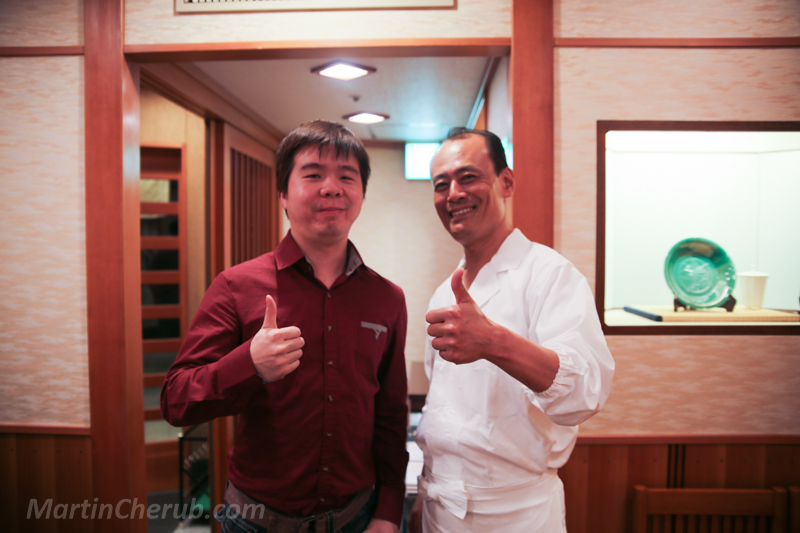
Ono Takashi is a really friendly guy and speaks English. When they asked if there was anything I don’t eat, I told them I’d eat anything — I wasn’t about to miss a single piece.
I wasn’t the only foreigner there. The other diners were tourists from Europe and Brazil. About 20 pieces of sushi per person. You are not going hungry.
The Omakase
Every piece was served on a beautiful green leaf-shaped ceramic plate, with a small mound of pickled ginger on the side. The fish quality was the best I’ve had in Japan. When I bit into each piece, the sushi was chewy and rich in flavour. The rice was warm and loosely packed, seasoned with red vinegar — it fell apart the moment you bit into it. That rice is as much the star as the fish.
Here’s the full progression, in the order they were served.
Hirame (Flounder)
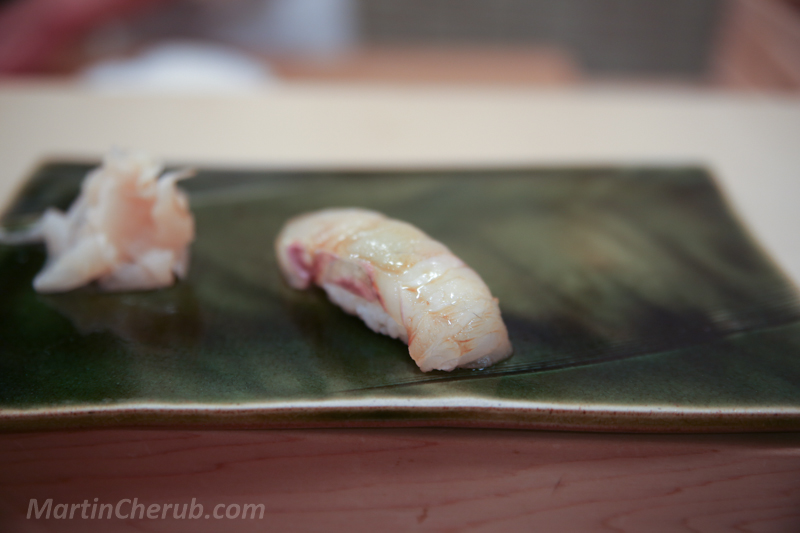
Delicate, subtle, almost sweet. The texture was incredible — firm but yielding, with a clean finish.
Sumi Ika (Cuttlefish)
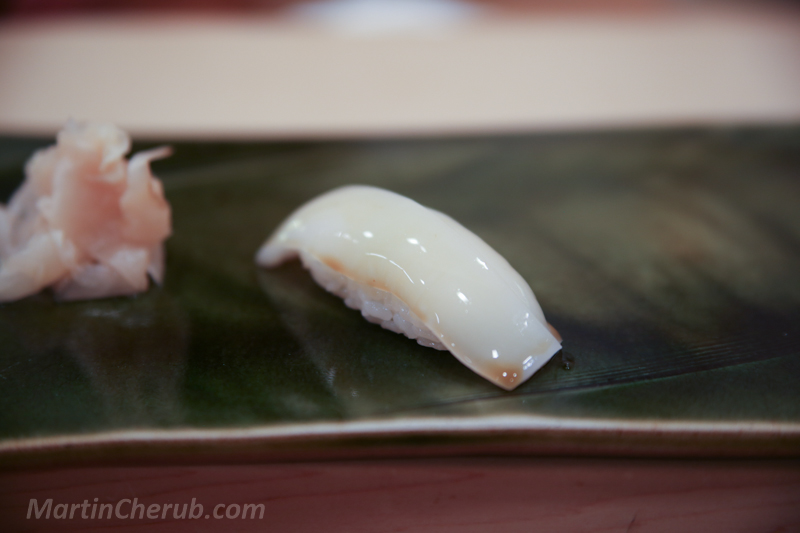
Smooth, ivory white, and scored with precise knife cuts. The cuttlefish had a gentle sweetness and a satisfying chew.
Mushi Awabi (Steamed Abalone)
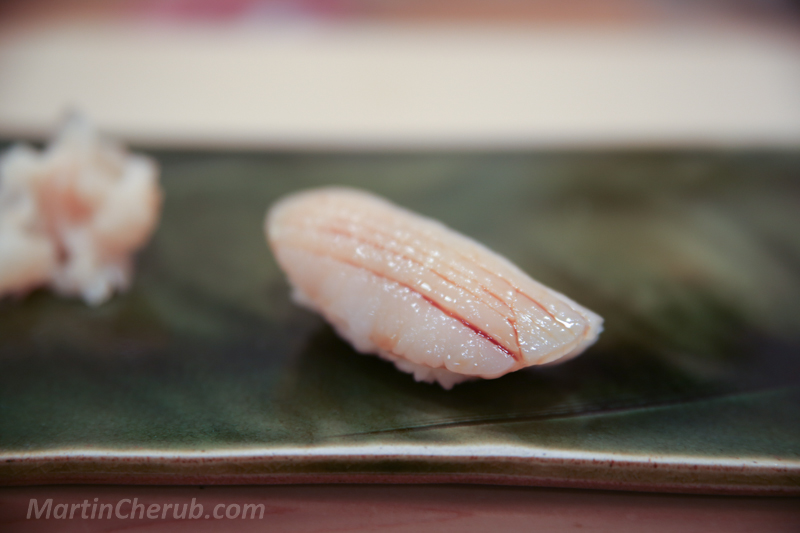
The abalone was steamed until tender, with a beautiful glaze. Rich, slightly chewy, and deeply flavourful. Not something you see at many sushi counters.
The Bluefin Tuna Progression
This was the moment. Takashi served three cuts of bluefin tuna in order — from the leanest to the fattiest. Each one was a step up in richness. I’ve never tried bluefin tuna that tasted this rich without any fishiness. They’ve found the secret — whatever they do to source and prepare this fish eliminates any off-flavour and leaves nothing but pure, concentrated taste.
Akami (Lean Tuna)
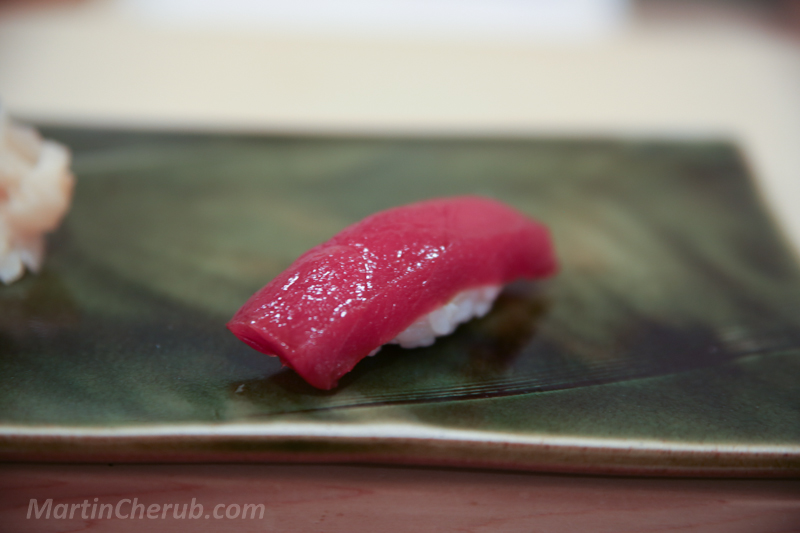
Vivid red, clean, and minerally. The leanest cut, but the flavour was intense — just pure, concentrated tuna.
Chu-toro (Medium Fatty Tuna)
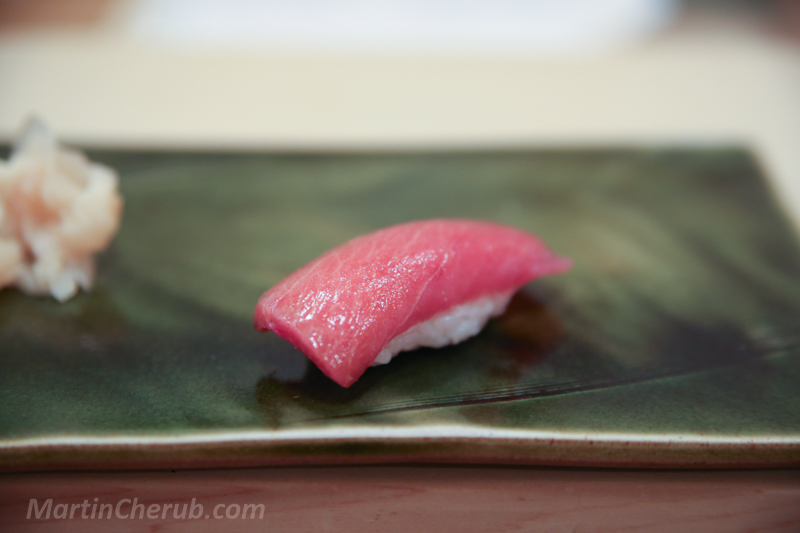
More fat, more richness. The chu-toro had visible marbling and a silkier texture. You could taste the fat starting to melt.
Oo-toro (Super Fatty Tuna)
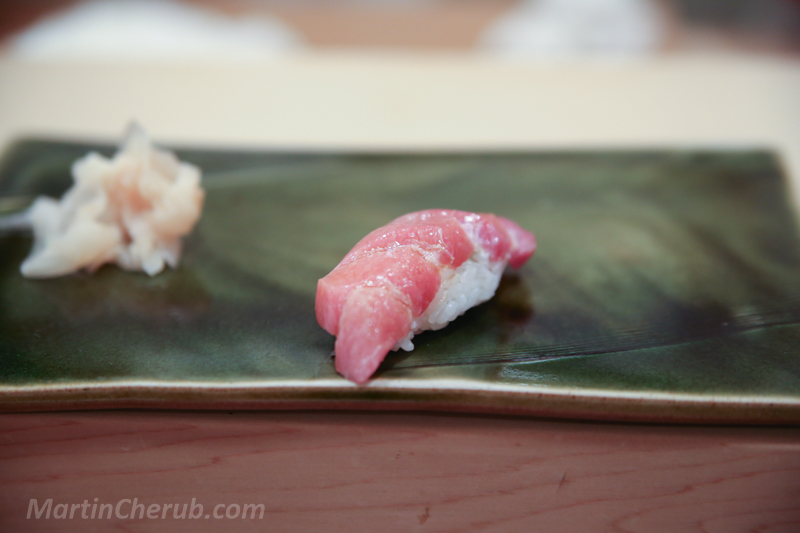
This was the peak. The oo-toro was pale pink, almost white with fat, and it dissolved the second it touched my tongue. The best single piece of sushi I’ve ever eaten. Possibly the best single bite of anything.
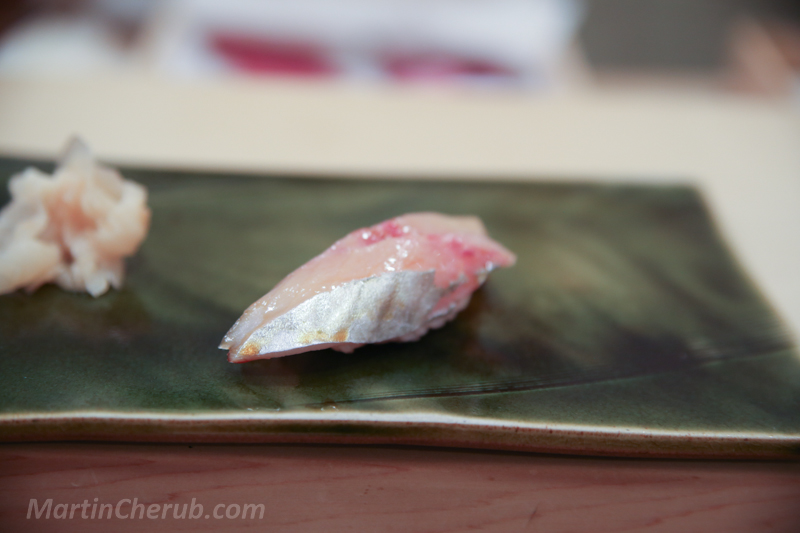
Kohada (Gizzard Shad)
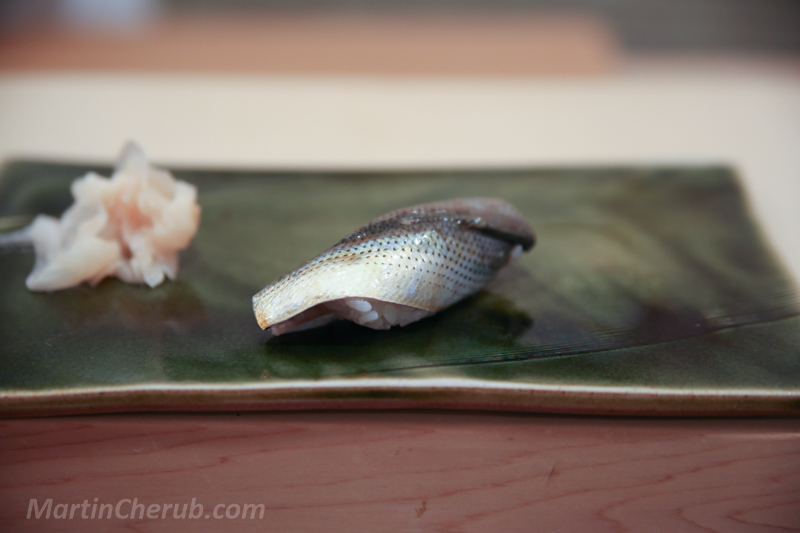
A classic Edomae-style piece. The silver skin glistens, and the vinegar cure gives it a sharp, clean bite. This is the piece that separates traditional sushi from the Americanised version.
Akagai (Ark Shell)
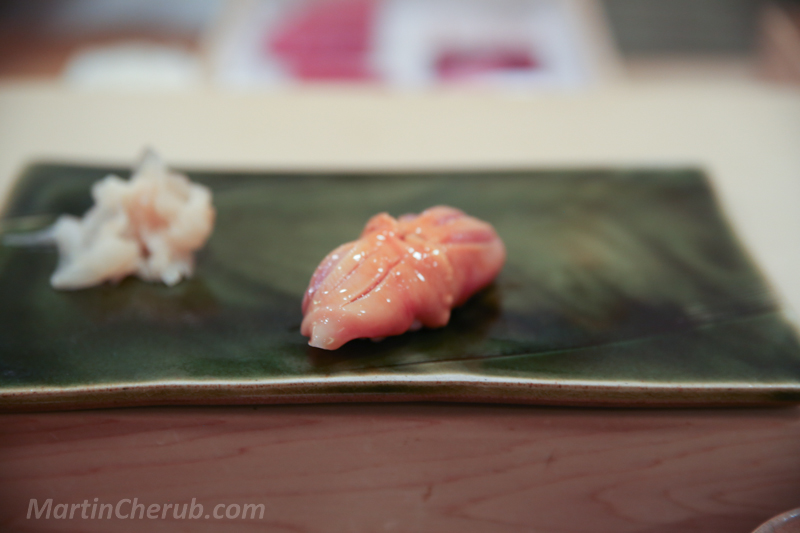
Bright pink and glossy. The akagai had a satisfying crunch and a briny, almost metallic sweetness that’s unique to this shellfish.
More Courses
Ikura (Salmon Roe)
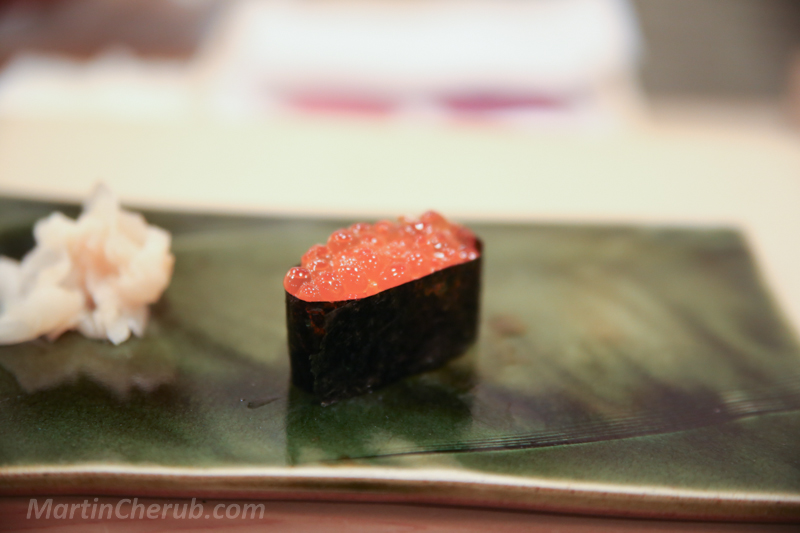
Bright, jewel-like, and bursting with each bite. The ikura popped cleanly and had a pure, salty sweetness.
Kuruma Ebi (Tiger Prawn)
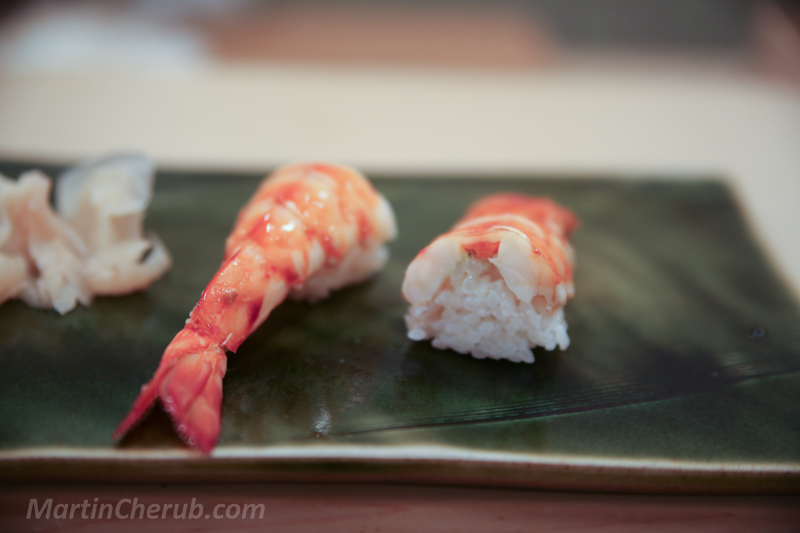
The kuruma ebi was served warm — lightly cooked, butterflied, with the tail presented alongside. Sweet, firm, and completely different from the cold shrimp sushi you get everywhere else.
Uni (Sea Urchin)
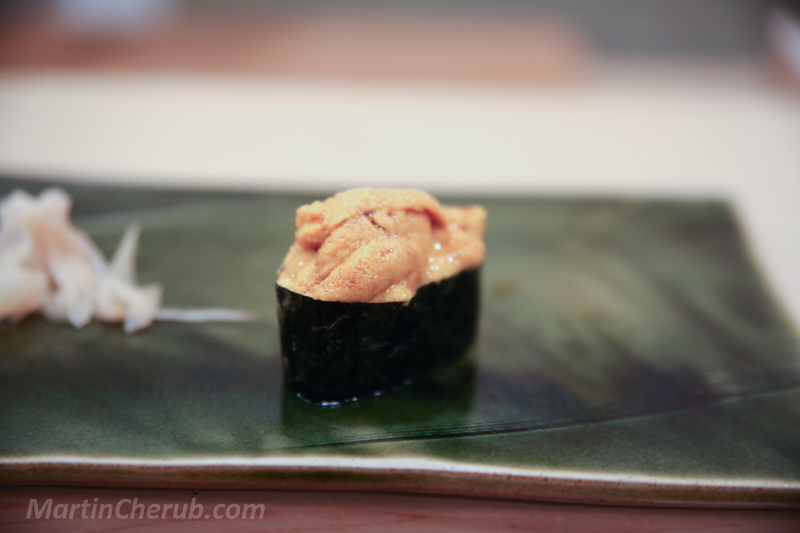
Creamy, briny, and intensely flavourful. The uni was served as a gunkan roll, overflowing with golden roe. At this level, uni tastes like the ocean distilled into a single bite.
The Later Courses
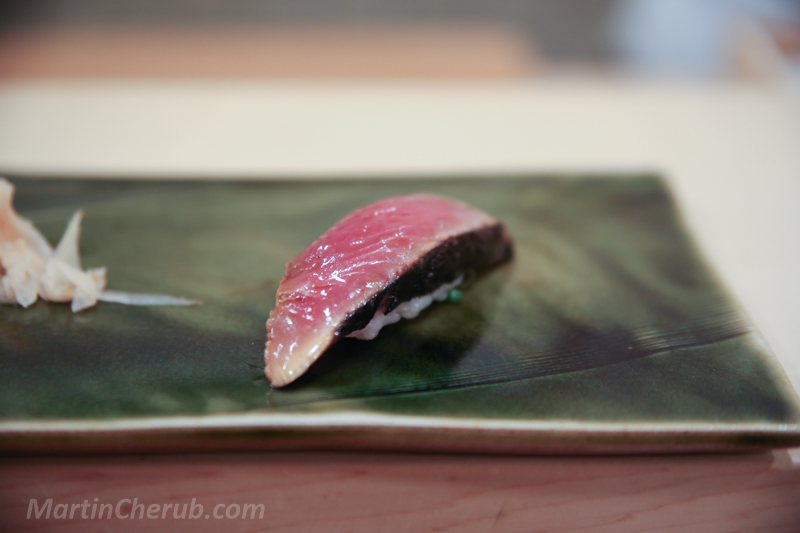
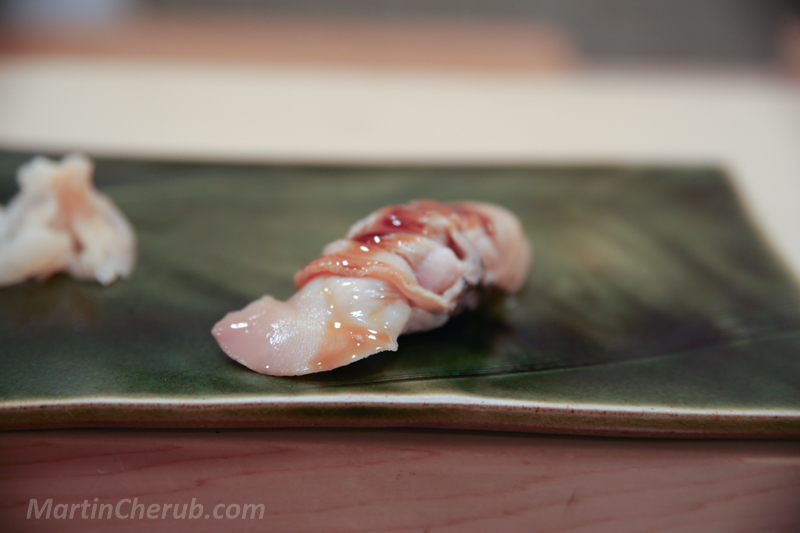
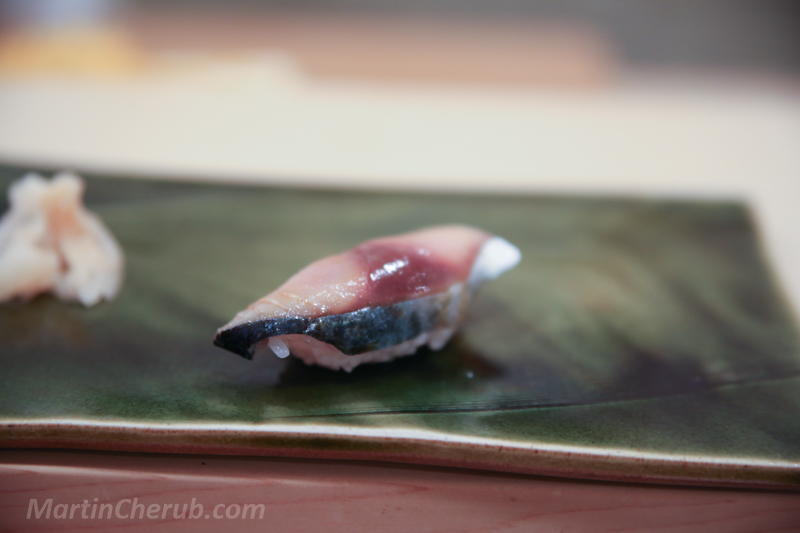
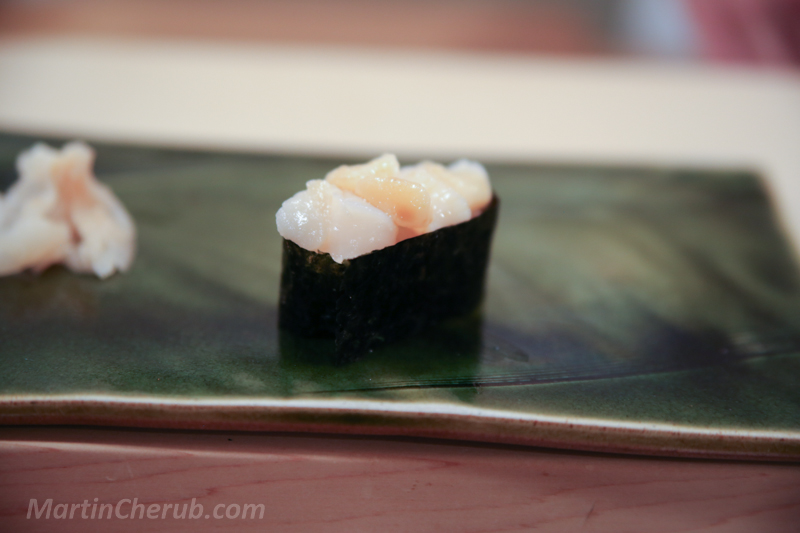
The courses kept coming — each piece distinct, each perfectly formed on the leaf-shaped plate. About 20 pieces in total, and not a single weak one in the entire progression.
Anago (Saltwater Eel)
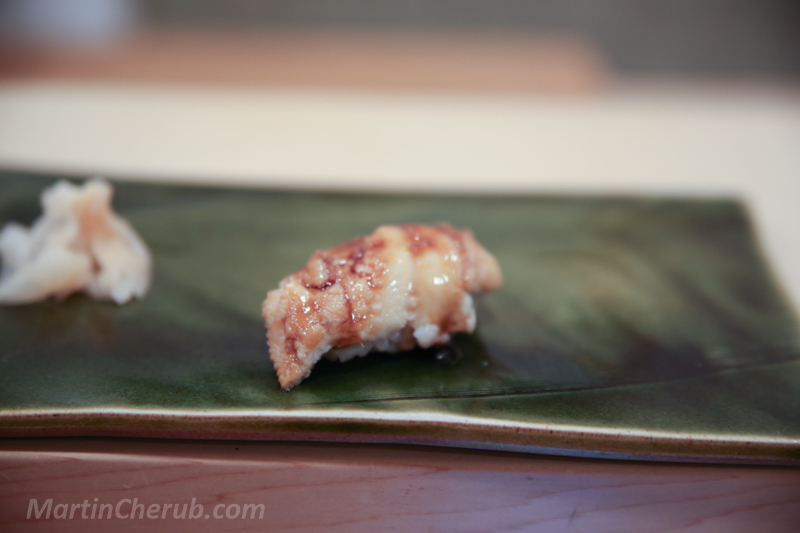
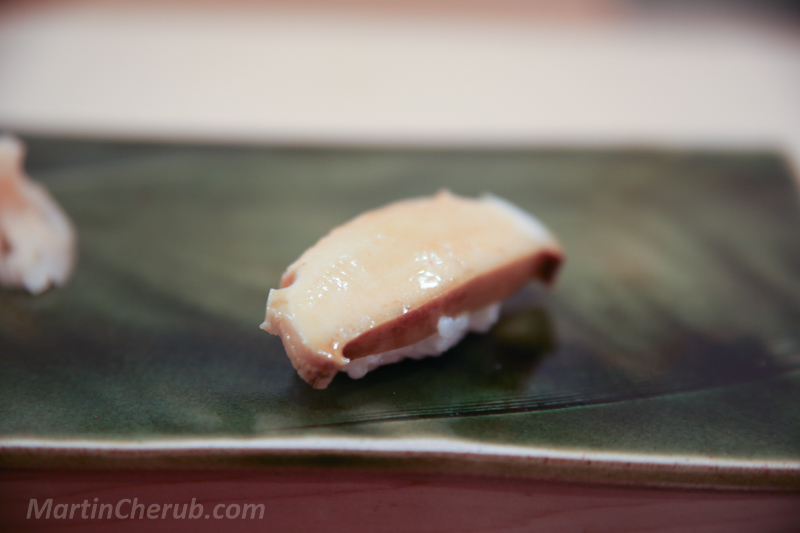
The anago was a revelation. Glazed, caramelised, rich and sweet. This was my first time trying saltwater eel, and it was incredible — completely different from freshwater unagi. The sweetness came from the fish itself, not just the glaze.
Tamagoyaki (Egg Cake)
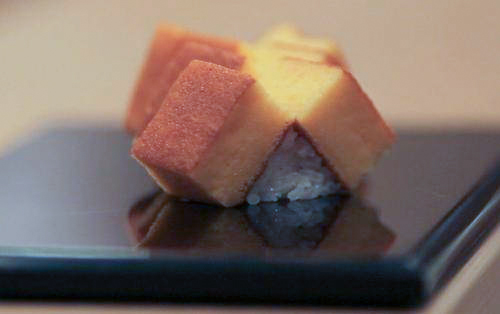
The traditional closer. But this wasn’t the omelette-style tamagoyaki I’m used to in the US. This was more like a cake — spongy, sweet, almost castella-like. Dense and rich, with a beautiful golden colour. The chef’s signature piece, and a perfect ending.
The Verdict
Score: 10 / 10 — The only perfect score I’ve ever given. This isn’t a restaurant in the normal sense. It’s the life’s work of a family that has spent decades pursuing perfection in a single dish. The fish quality was the best I’ve ever had in Japan. The rice was flawless. The progression was deliberate and meaningful. And sitting at a 10-seat counter while Ono Takashi prepares each piece by hand, just for you, is something I’ll never forget.
The total bill was ¥28,000 ($280) — the most expensive dinner I’ve ever had, and worth every yen. If you ever get the chance, find a way in. Book the expensive hotel, make the phone calls, do whatever it takes. I’m definitely going back.