Sushi Zo in LA: Omakase, Real Wasabi, and a $200 Lesson in Letting Go
I was in LA and a few people had told me to try Sushi Zo. No menu. No California rolls. No crunchy anything. Just omakase — the chef decides what you eat, and you sit there and trust the process.
That’s either exciting or terrifying depending on how you feel about control. I was into it.
The Restaurant
9824 National Blvd, Los Angeles, CA 90064
Sushi Zo is a small, no-nonsense sushi bar. You sit at the counter, the Japanese chefs work right in front of you, and the food comes when it comes. There’s no printed menu to browse — it’s omakase only, which means the chef serves whatever’s freshest that day in whatever order he sees fit.
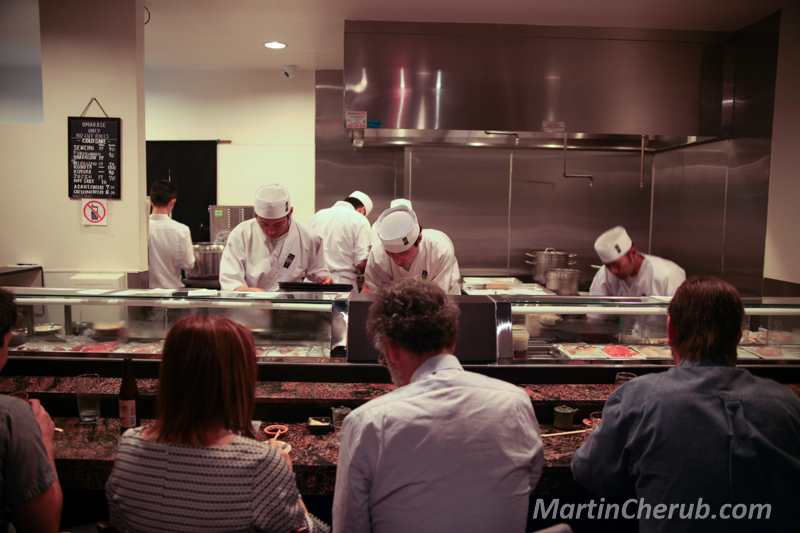
The space is clean and simple. Nothing fancy about the decor — the focus is entirely on the fish. Most of the staff are Japanese, including all the chefs behind the counter.
The Rules
The waiter laid down the ground rules early: don’t add soy sauce. The chef has already seasoned everything — most pieces arrive marinated, brushed, or cured. If you’re the type who drowns your sushi in soy, this place will challenge you. In a good way.
My friend asked for extra wasabi. The answer was no. They use real wasabi here — freshly grated, not the horseradish paste you get at most Japanese restaurants. The real stuff is eye-wateringly expensive, which is why they portion it carefully. It’s also noticeably different — sharper, more fragrant, and it dissipates quickly instead of lingering.
Don’t expect California rolls, dragon rolls, or anything with tempura crunch. This is nigiri only (with a couple of hand rolls to close). If you want to know what proper Japanese sushi tastes like — the kind you’d actually get in Tokyo — this is as close as LA gets.
The Omakase
The pieces came one at a time, each on its own plate, each with its own character. I photographed every single course. Here’s the full progression.
Oyster
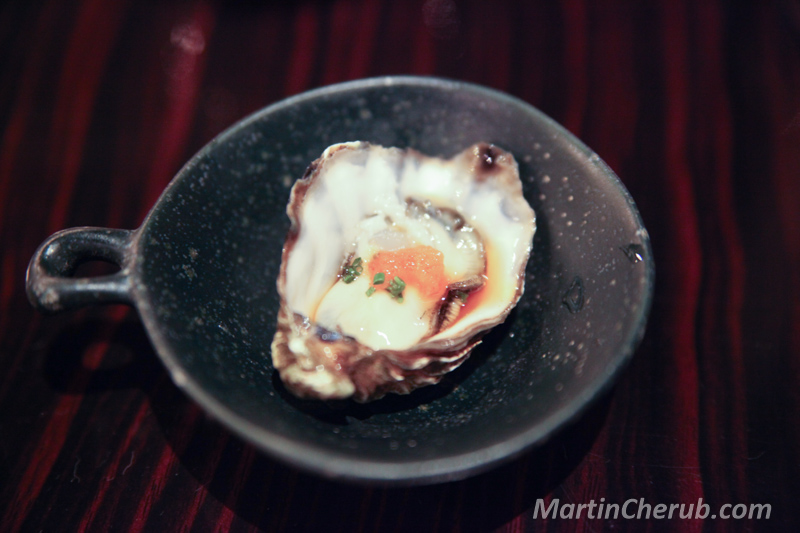
It started with a single oyster — plump, briny, topped with a drop of ponzu and what looked like momiji oroshi. A clean, sharp opener that woke everything up.
Tuna
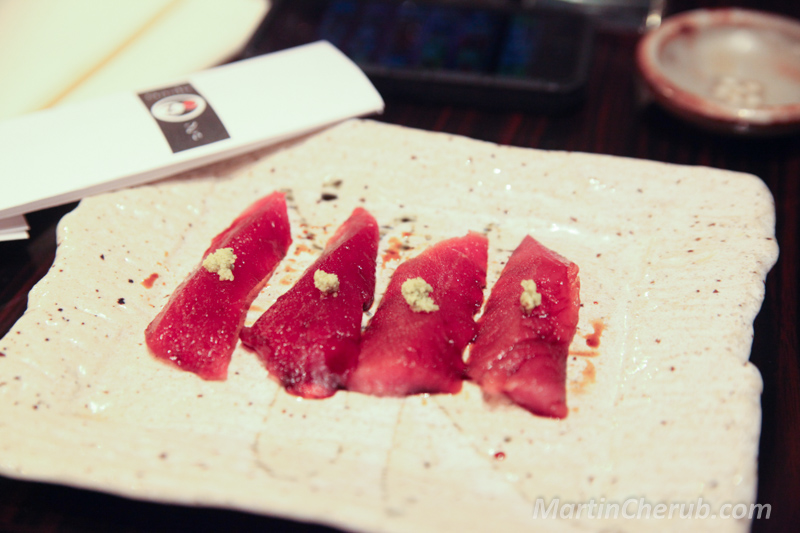
Four slices of marinated maguro laid out on a speckled plate, each with a small dab of real wasabi. The fish was ruby red and silky — this was the moment I understood why they said no soy sauce. The marinade was already perfect.
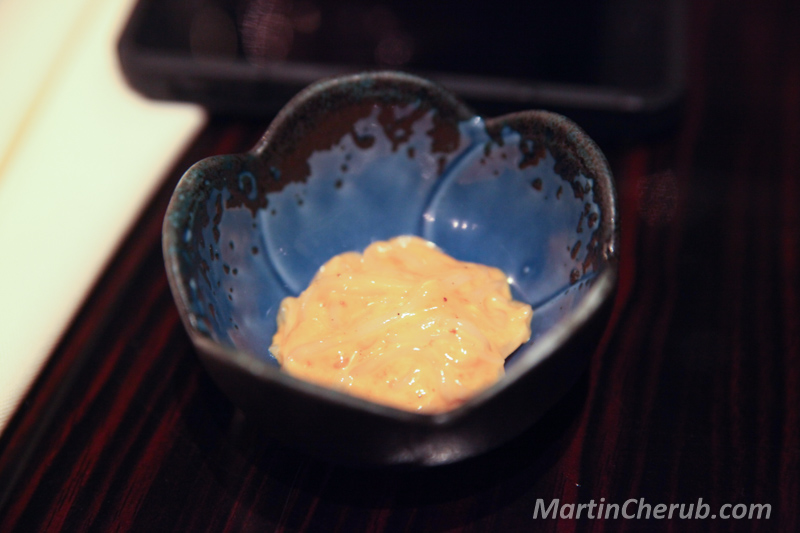
A small condiment dish arrived alongside — a bright yellow paste in a beautiful flower-shaped bowl. One of those little extras that sets the tone.
The White Fish Parade
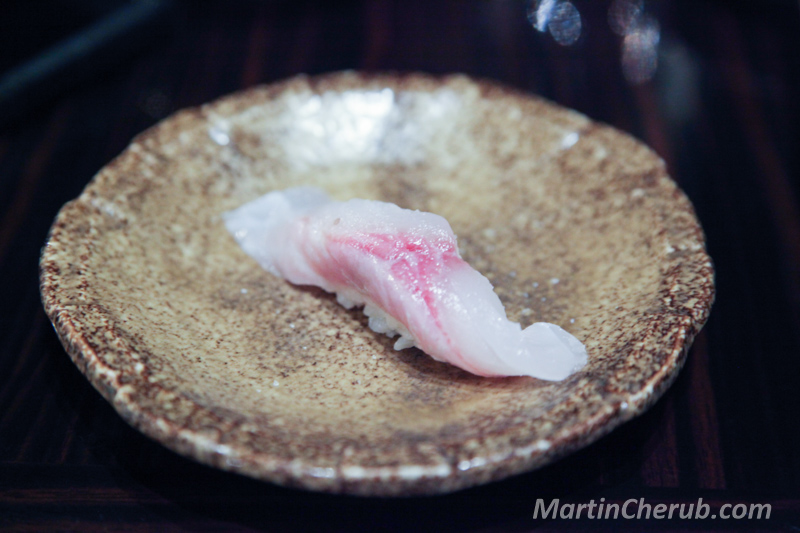
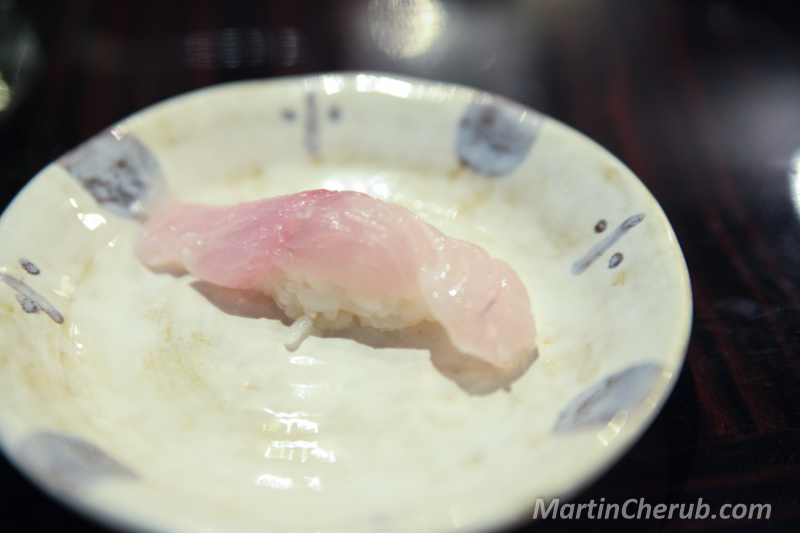
This is where the omakase really showed its range. Course after course of white fish — halibut, fluke, red snapper, shima aji (striped jack), kinmedai (golden eye snapper), and more. I’ll be honest: in the dim lighting, many of these look similar in photos. But on the tongue, each one was distinct.
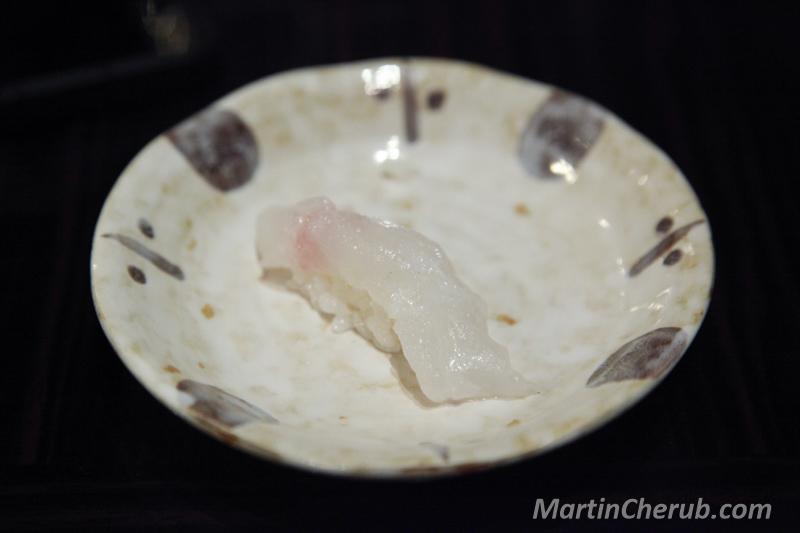
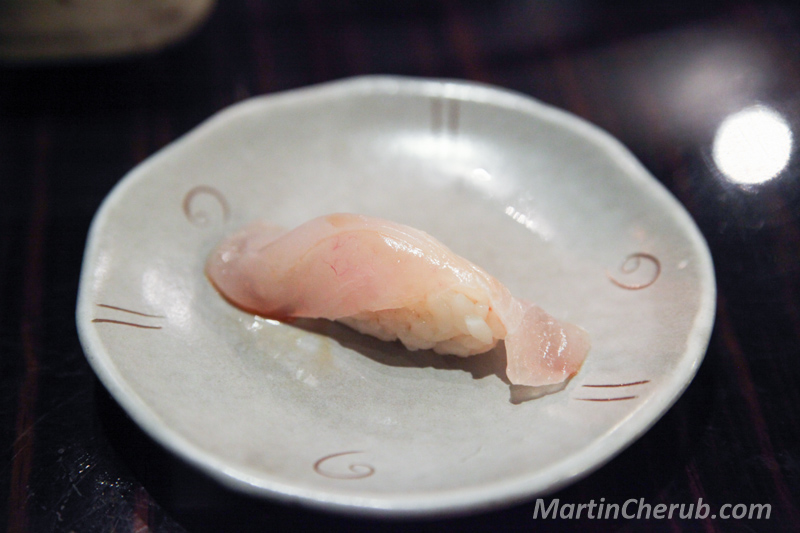
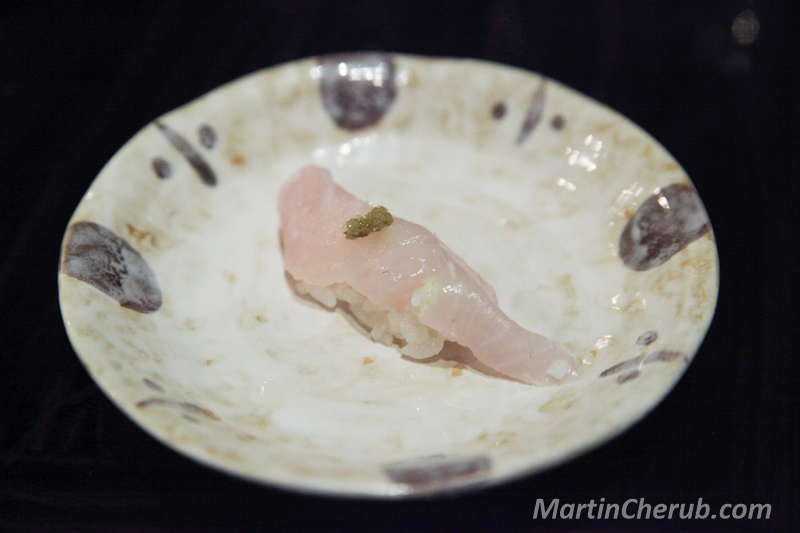
Some arrived with just a touch of real wasabi on top. Others came with the faintest brush of soy or citrus. The chef was clearly tailoring each piece to the fish.
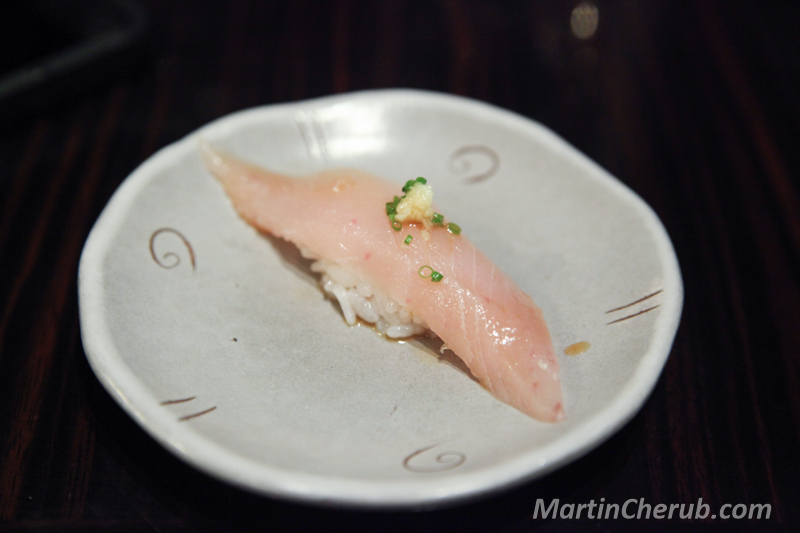
This one came with a tiny garnish of grated ginger and chopped scallion — bright, aromatic, and a nice contrast to the cleaner preparations.
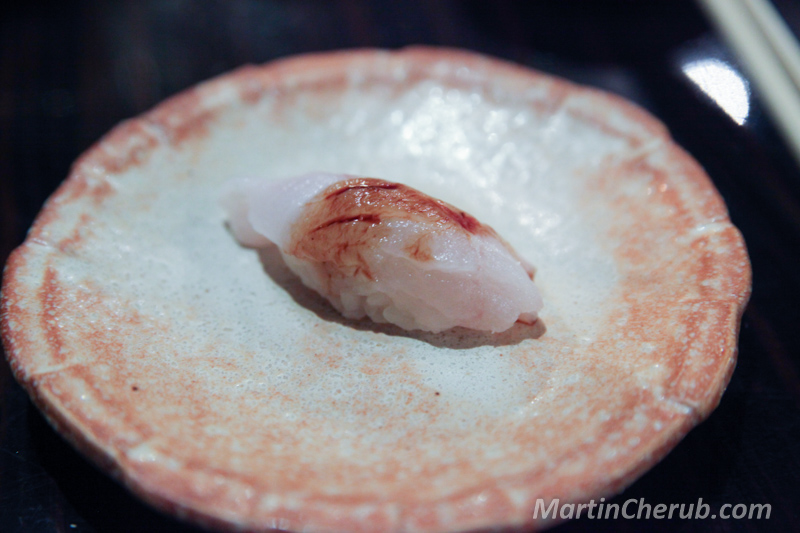
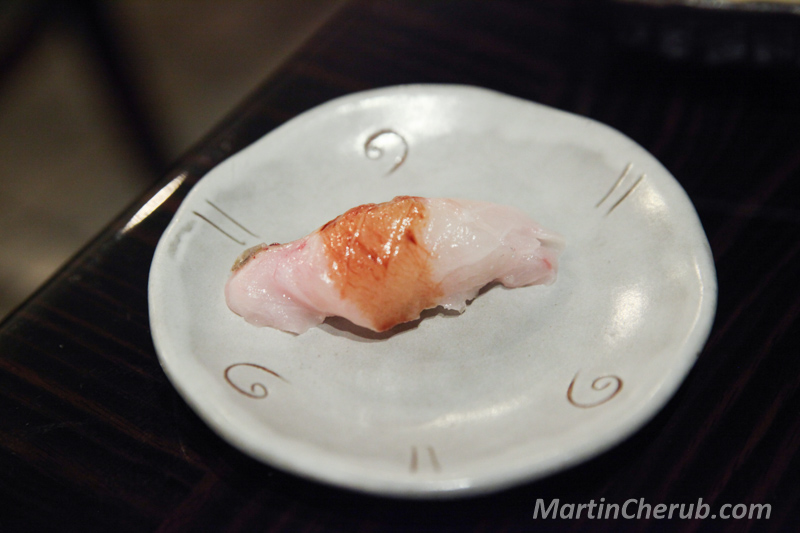
Two pieces arrived with the skin on — lightly scored and seared. The contrast between the crisp skin and the soft flesh was excellent.
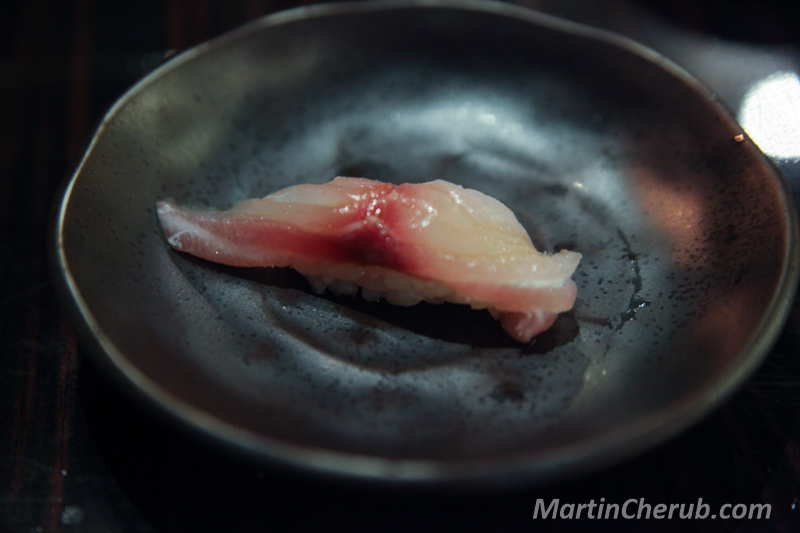
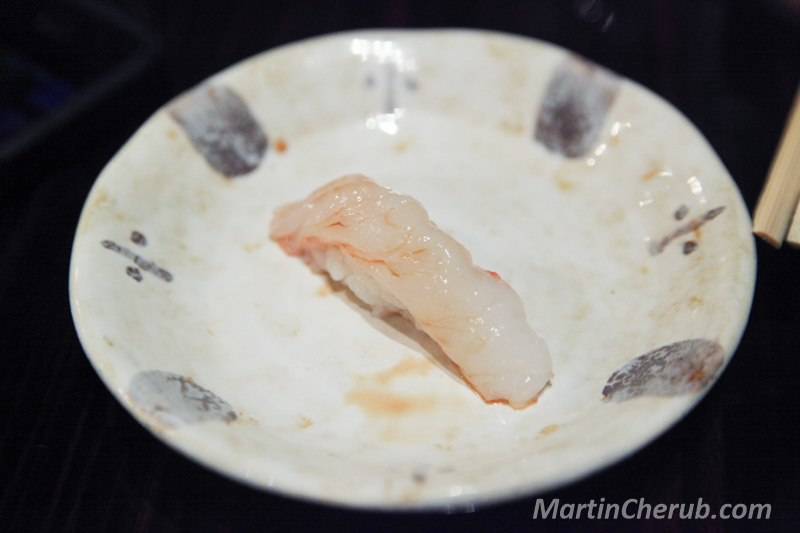
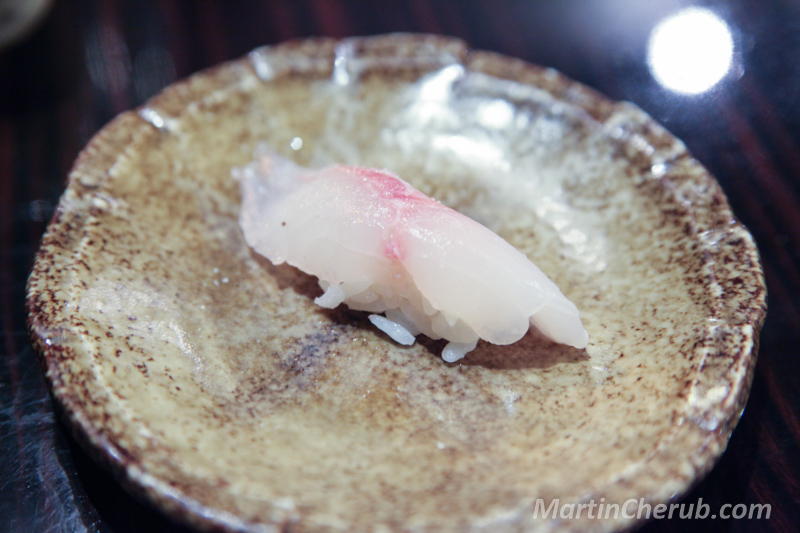
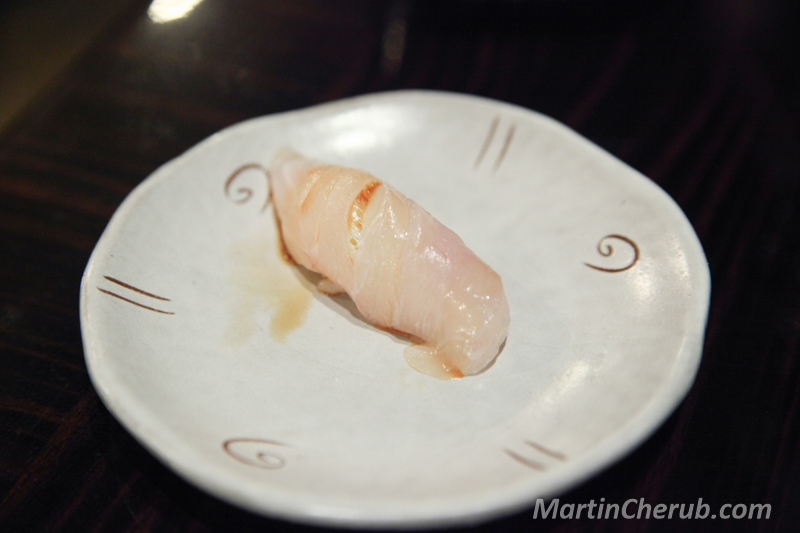
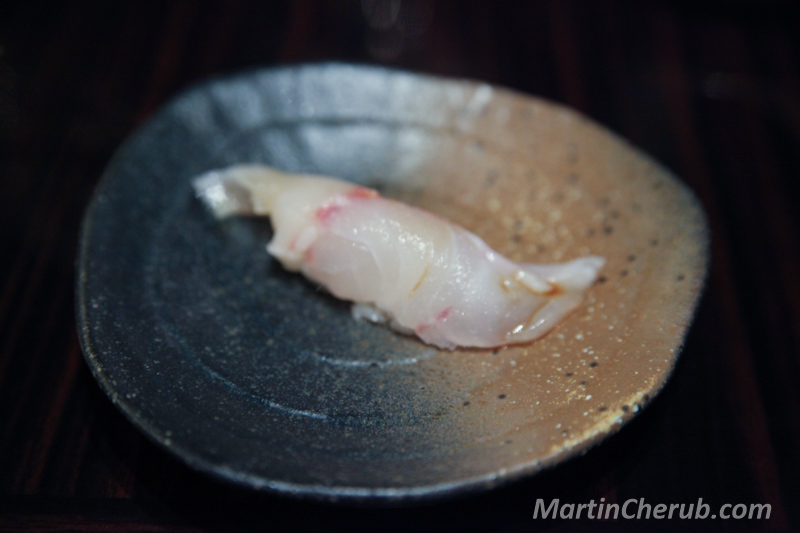
Every piece was served on a different plate — handmade ceramics in all shapes, glazes, and colours. It’s a small detail, but it tells you this place takes presentation seriously even when the food speaks for itself.
Albacore
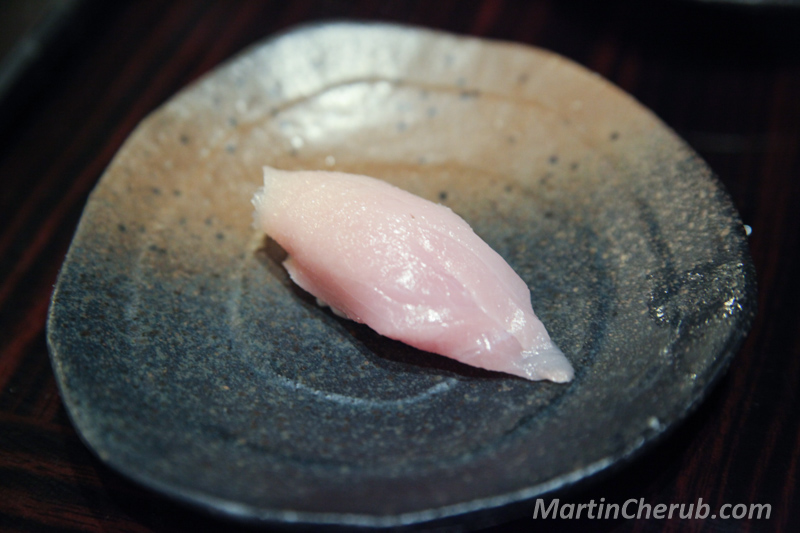
The albacore — pale, smooth, buttery. One of the cleaner-tasting pieces in the lineup.
Aji
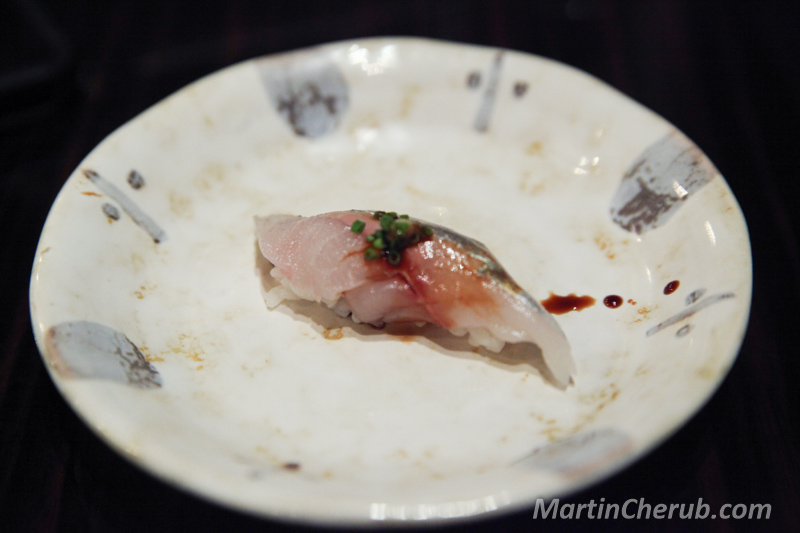
The aji (horse mackerel) was one of my favourites — oilier, more assertive, topped with chopped scallion and a drizzle of soy. This one had real punch. The bill calls it “Spanish Mackerel” but it’s the fish the Japanese know as aji.
Scallop
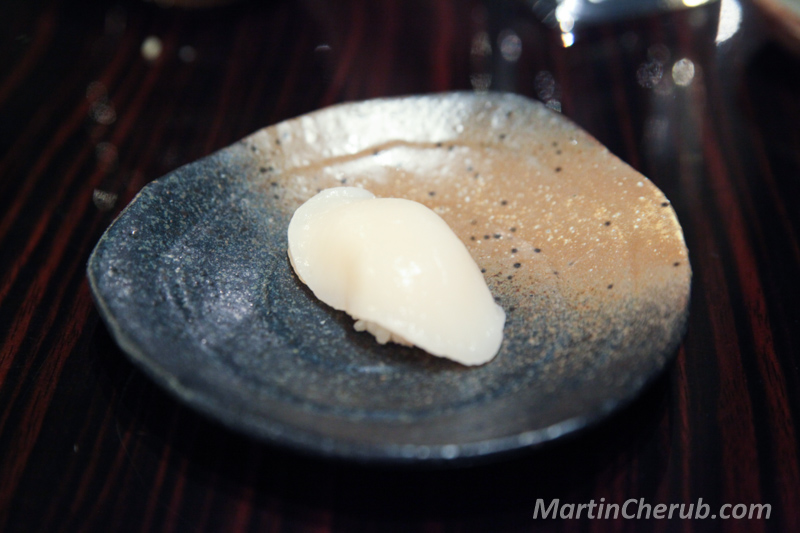
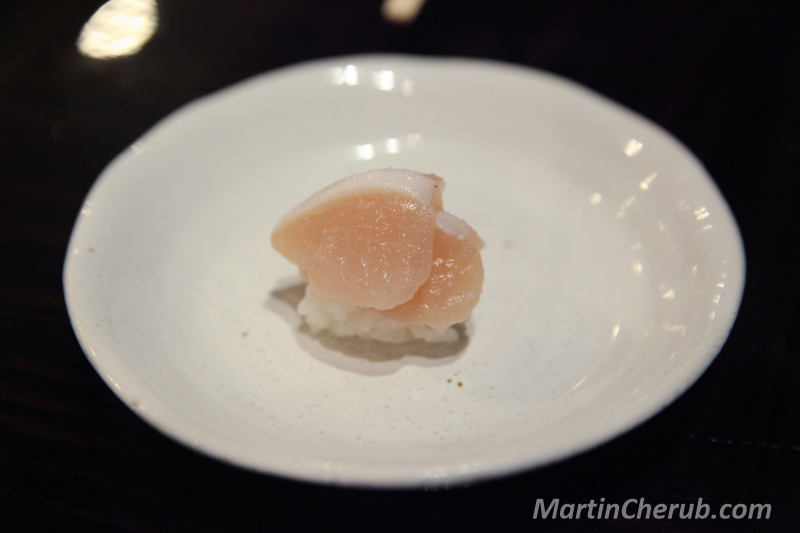
The hotate was sweet and creamy — barely any seasoning needed. Just pure, clean sweetness.
Sweet Shrimp
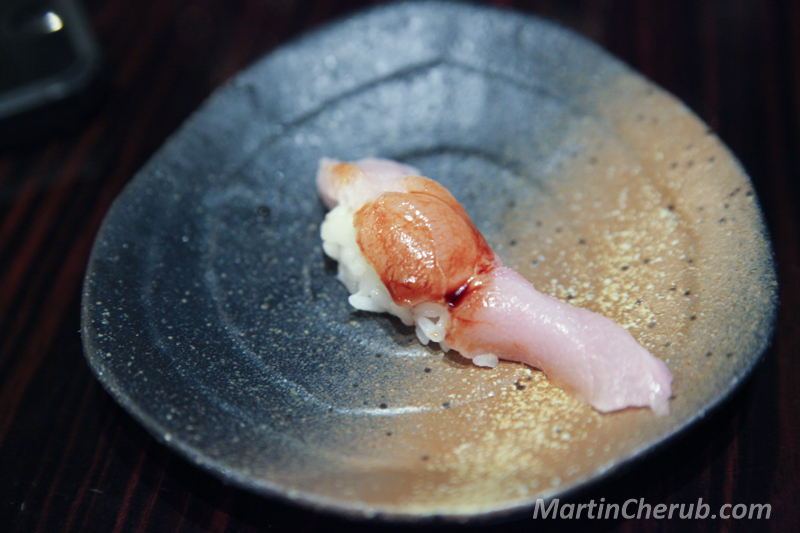
The amaebi arrived as two pieces — the raw shrimp had that signature snappy sweetness that you only get when it’s properly fresh.
Toro
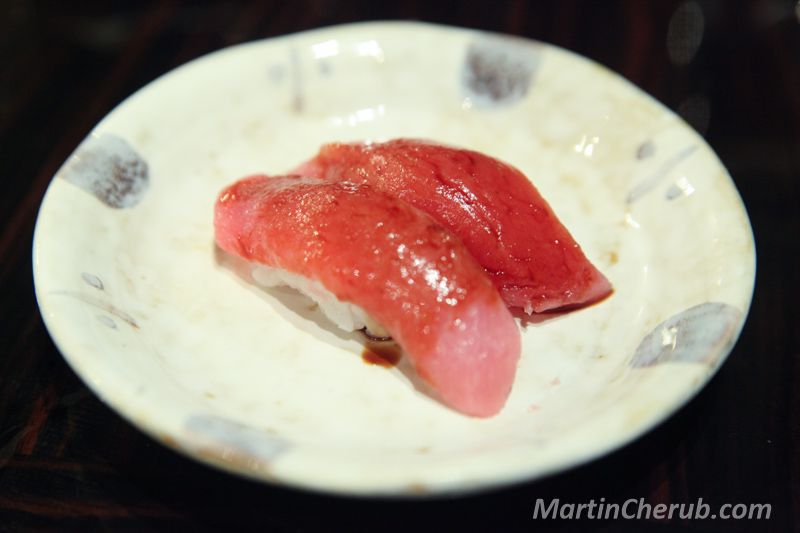
The toro. Deep pink, glossy, marbled with fat. It melted on contact. This was the showstopper — the piece that makes you close your eyes and just sit there for a second. Rich, buttery, and completely effortless. Best bite of the night.
Baby Squid
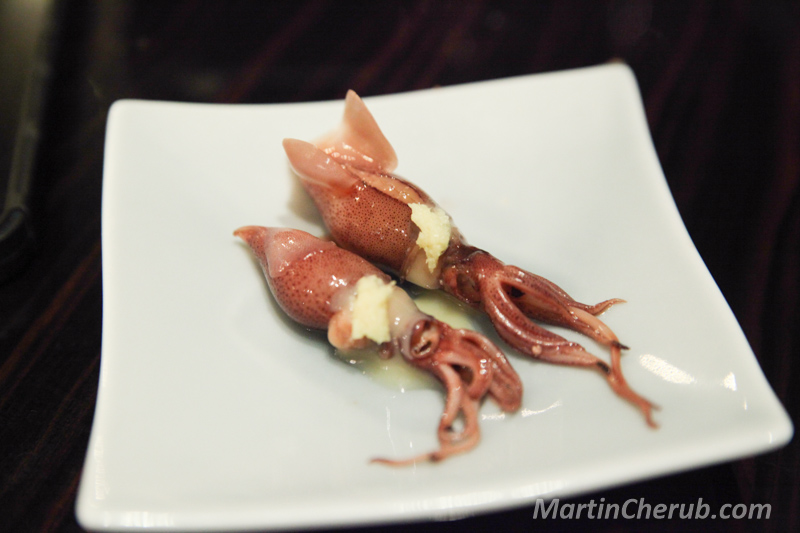
A surprise — whole baby squid, stuffed with rice, tentacles and all. More rustic than the elegant nigiri that came before, but delicious in a completely different way.
Squid
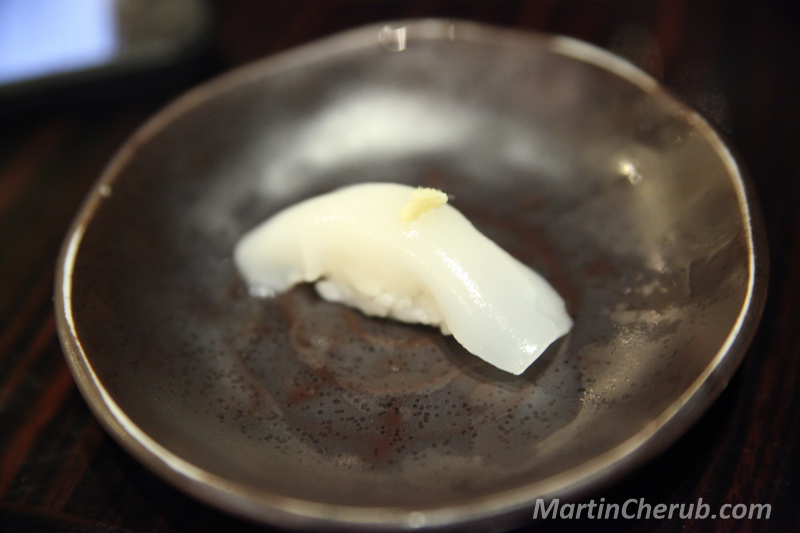
The regular squid nigiri — scored for texture, ivory white, smooth and clean. A quieter course after the drama of the baby squid.
Ankimo
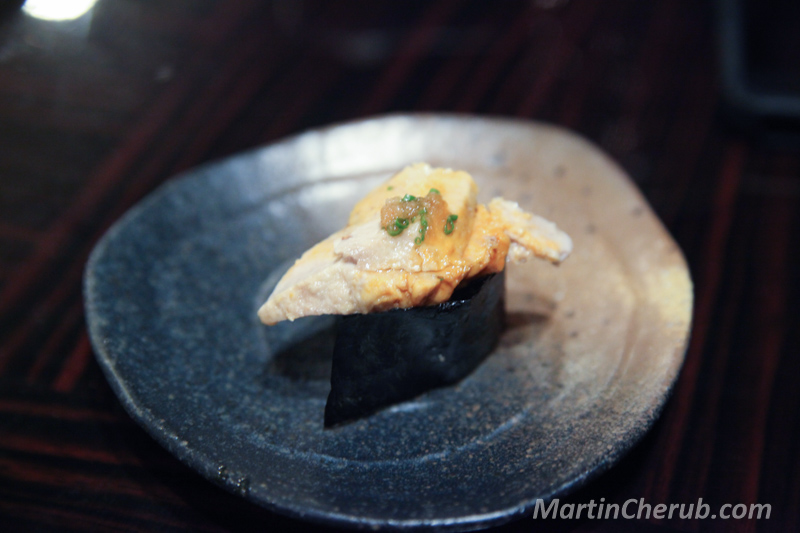
Monkfish liver served as a gunkan roll — wrapped in nori, topped with scallion. Rich, almost foie gras-like. One of those things that sounds intimidating but tastes incredible.
Uni and Ikura
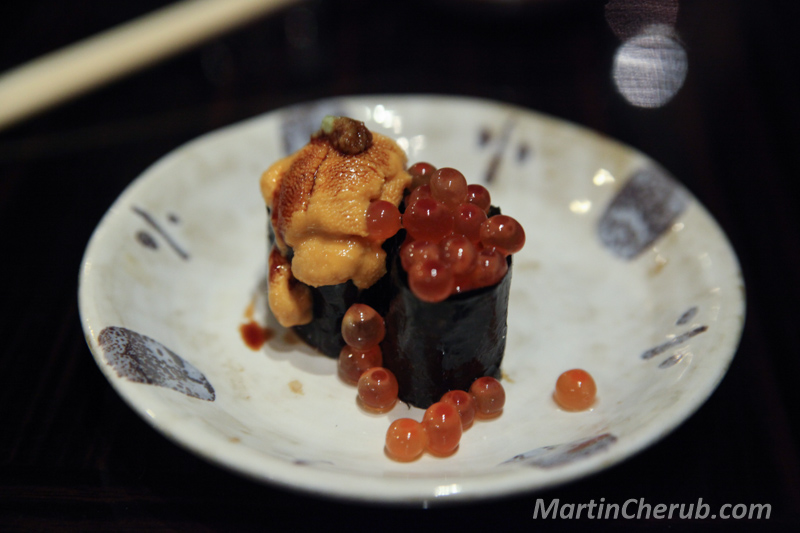
This was the plate that made me reach for the camera before my chopsticks. Uni gunkan and ikura gunkan side by side — the creamy, briny richness of sea urchin next to the pop and burst of salmon roe. Beautiful to look at, even better to eat.
Salmon
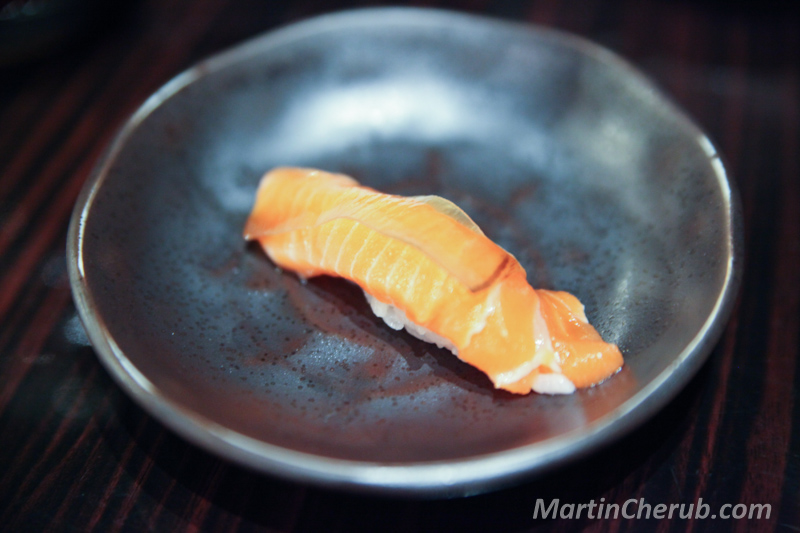
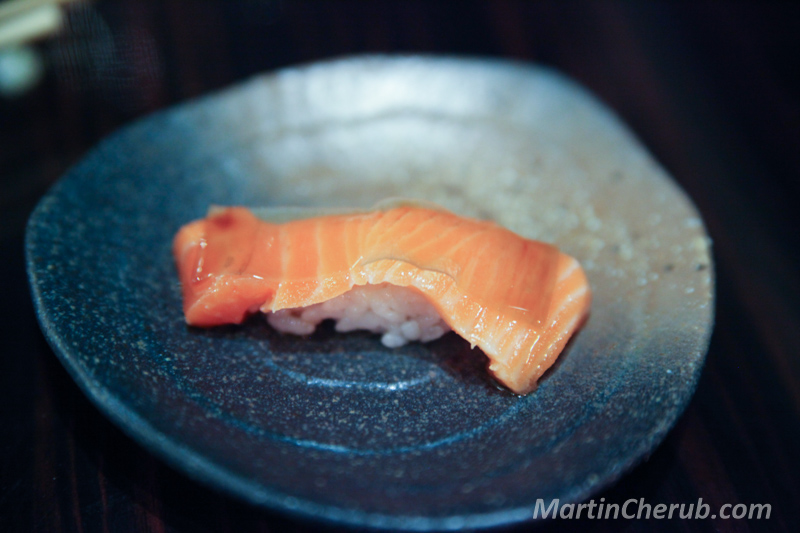
Two rounds of salmon — the regular cut bright and clean, the belly richer and fattier with deeper colour. Both gorgeous.
The Finale
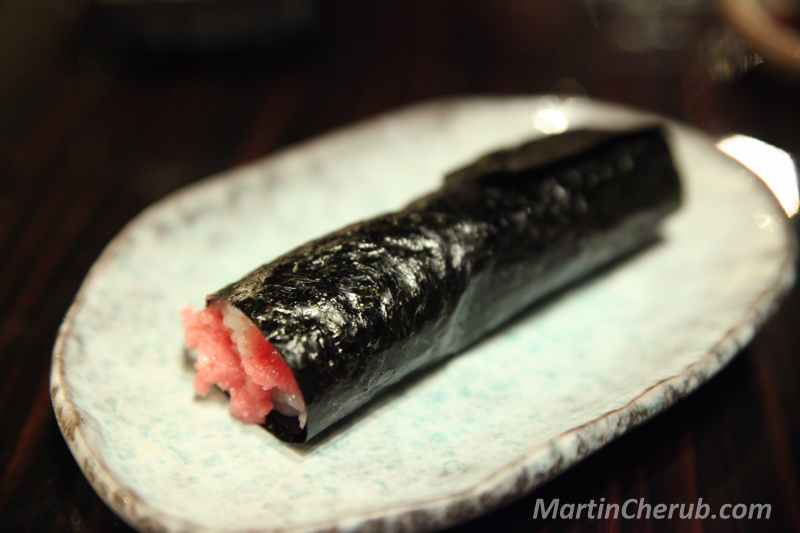
A toro hand roll to close the nigiri — chopped fatty tuna wrapped in crisp nori. Simple, satisfying.
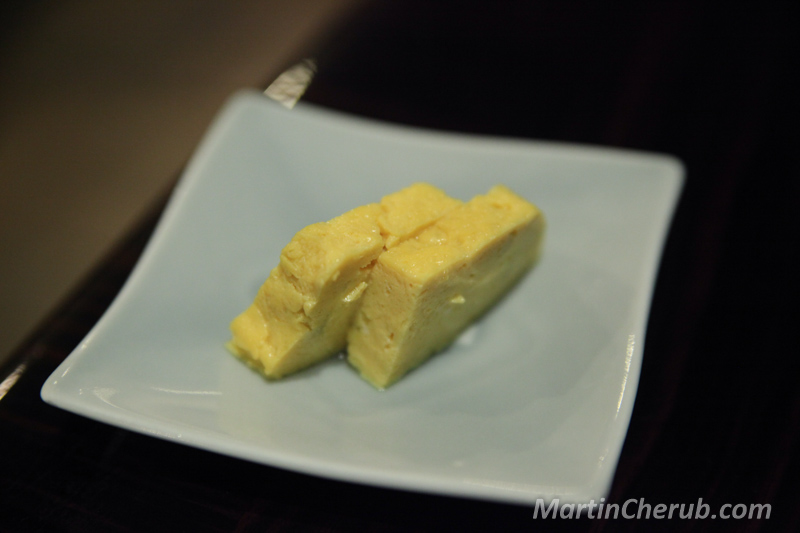
And finally, tamagoyaki. Sweet, fluffy egg omelette, sliced into blocks. In traditional omakase, the egg is always last — it’s the chef’s signature, and it tells you a lot about their skill. This one was excellent. Sweet without being cloying, with a custardy texture.
The Sake
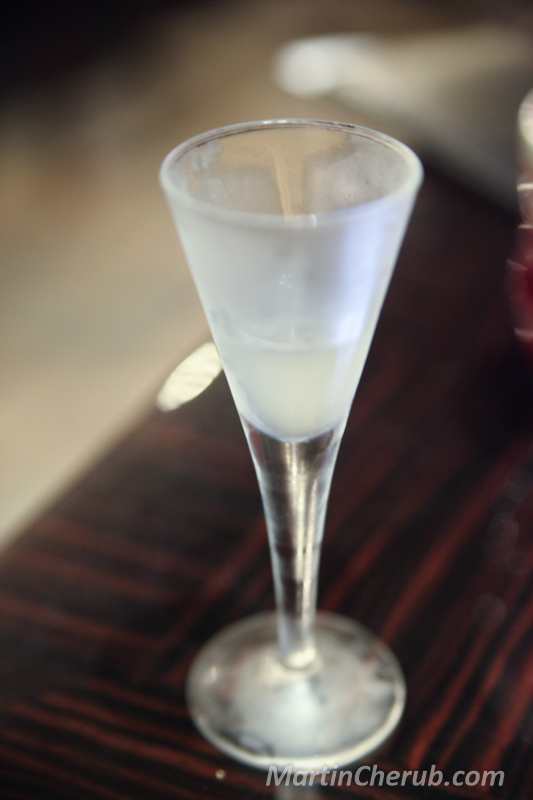
Don’t skip the sake. A cold glass paired with the omakase is the right move — it complements the fish without competing with it.
The Damage
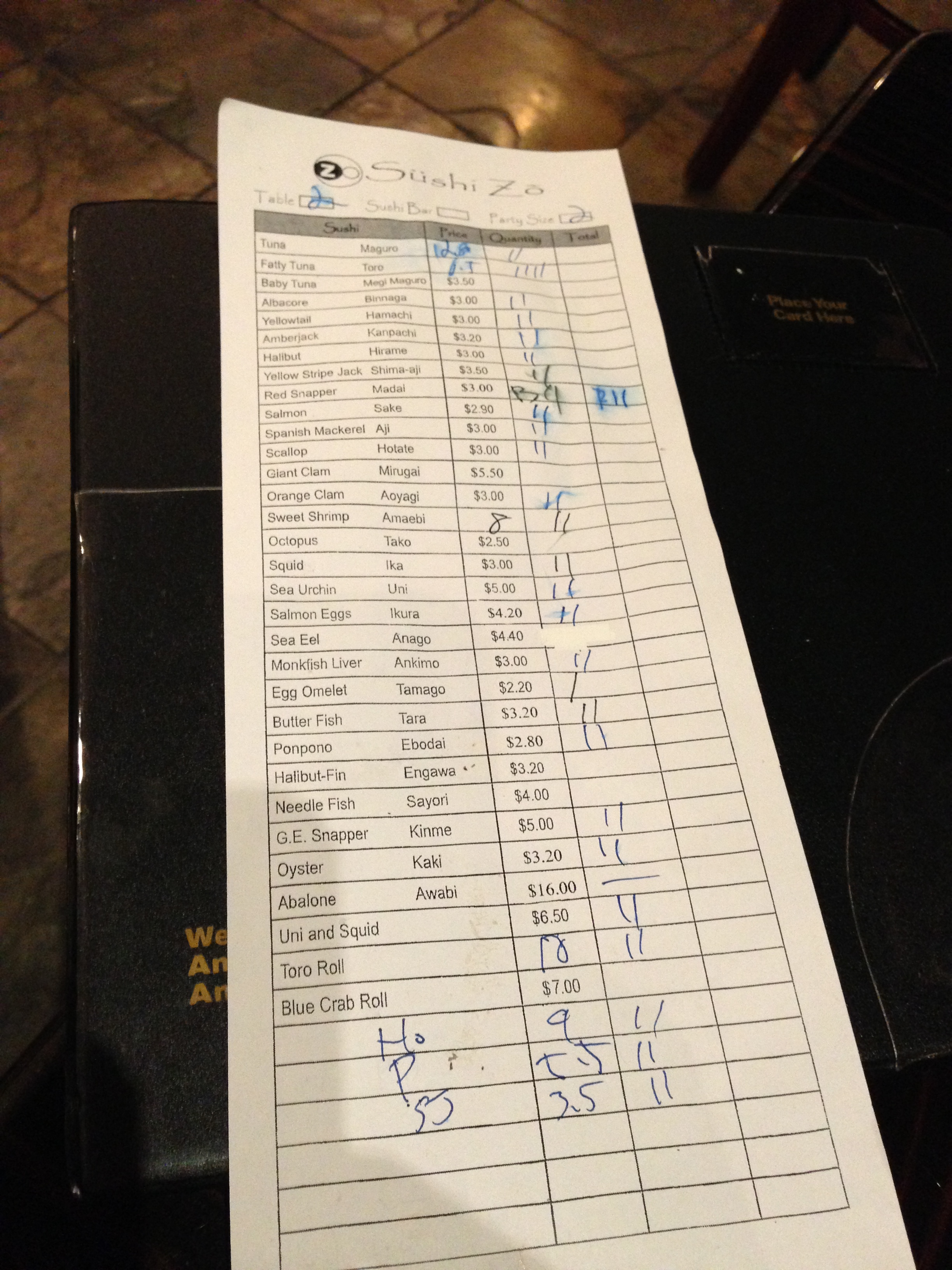
About $200 per person. The bill is a proper checklist of every piece served. Here’s the full list from the sheet:
Tuna (maguro), fatty tuna (toro), baby tuna, albacore, amberjack (kanpachi), fluke, striped jack (shima aji), red snapper, halibut, Spanish mackerel (aji), scallop (hotate), giant clam (mirugai), orange clam (aoyagi), sweet shrimp (amaebi), octopus (tako), squid (ika), sea urchin (uni), salmon, salmon roe (ikura), sea eel (anago), monkfish liver (ankimo), tamagoyaki, butter fish, ponponni (ehodai), halibut fin (engawa), needle fish (sayori), golden eye snapper (kinmedai), oyster (kaki), abalone (awabi, $16 for that one alone), uni and squid combo, toro roll, and blue crab roll.
Over 30 courses. For omakase of this quality in LA, the price is fair. You’re paying for sourcing, skill, and the kind of fish that most restaurants simply don’t have access to.
Bonus: Sushi Pizza at JW Marriott
After Sushi Zo, I was still curious, so I also tried the sushi pizza at the JW Marriott’s L.A. Market Restaurant nearby.
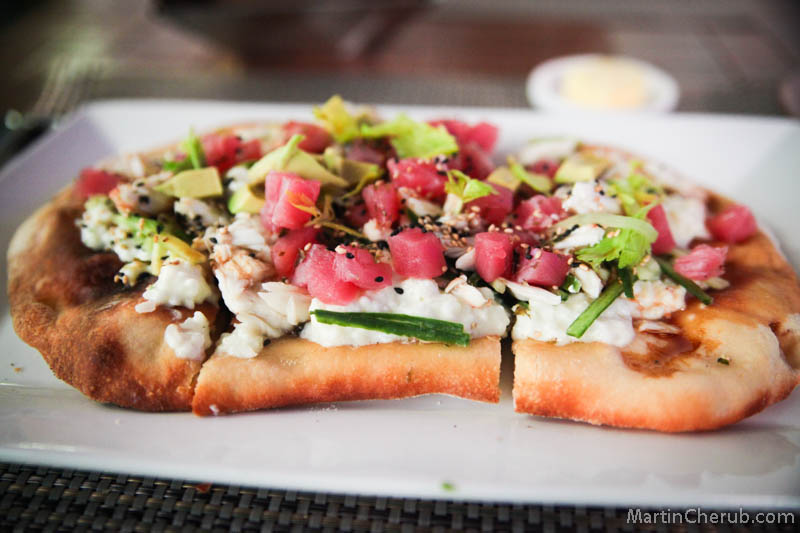
It’s a flatbread base topped with diced tuna, crab, avocado, and sesame. A completely different vibe from Sushi Zo — playful, Americanised, and honestly pretty fun. Not in the same league, but worth trying if you’re in the area and want something lighter.
The Verdict
Score: 8.0 / 10 — Sushi Zo is the kind of place that reminds you what sushi is supposed to be. No gimmicks, no fusion, no rolls smothered in mayo and sriracha. Just exceptional fish, prepared simply, by chefs who clearly know what they’re doing. The omakase format forces you to let go and trust — and the payoff is a 30+ course meal that’s more educational than most sushi courses.
It’s not cheap, and it’s not for everyone. If you want a menu and a spicy tuna roll, go somewhere else. But if you want the real thing, Sushi Zo delivers.