Tai Er San Mateo: Sichuan Sauerkraut Fish, Done Properly
I love Sichuan food. I’ve eaten it at Suji in Indonesia, at Wei Fish in Cupertino, at Yao Yao in the Bay Area, and at a long list of strip-mall Sichuan places that locals swear by. So when I heard Tai Er (太二) — the cult chain with 650+ locations across China — was opening in the Bay Area, it went straight to the top of my list.
The original plan was the Valley Fair location. That one is newer and apparently impossible to get a reservation at right now. So I pivoted to the San Mateo restaurant, which has been open a little longer and where the demand has settled into something manageable.
Based on this visit, the wait list at Valley Fair is justified. This is a lot better than the other Sichuan places I’ve been to in the Bay Area.
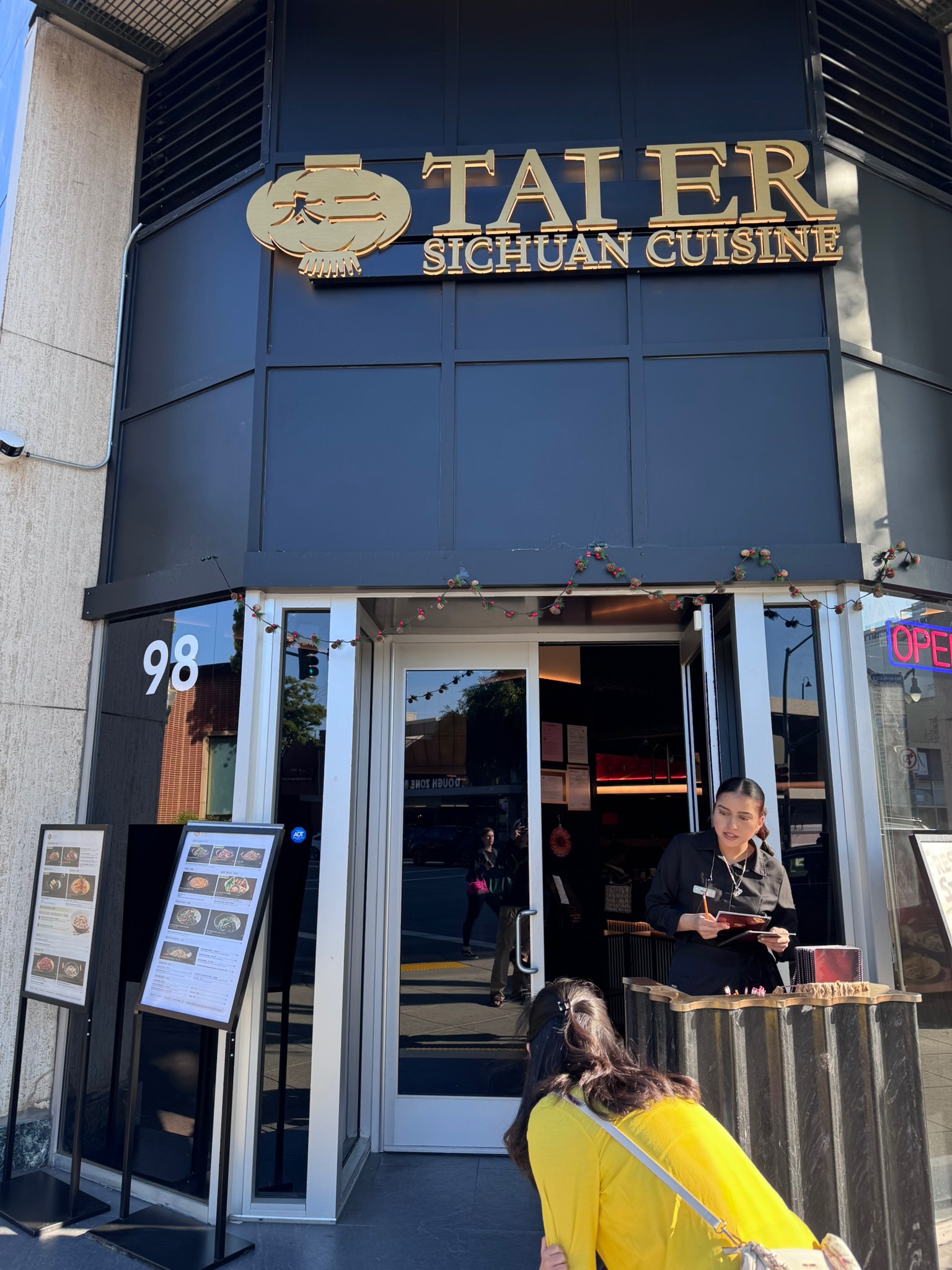
The brand built its reputation on a single dish: suancai yu — sauerkraut fish. The story on the menu reads like a marketing line, but it also happens to be the truth: “You’re 太二 (Tai Er)” — meaning you’re taking things way too far, in the best way. That’s the founding spirit. One dish, obsessively perfected.
This is their first attempt at an “elevated dining concept” outside China. So how does it translate?
The Space
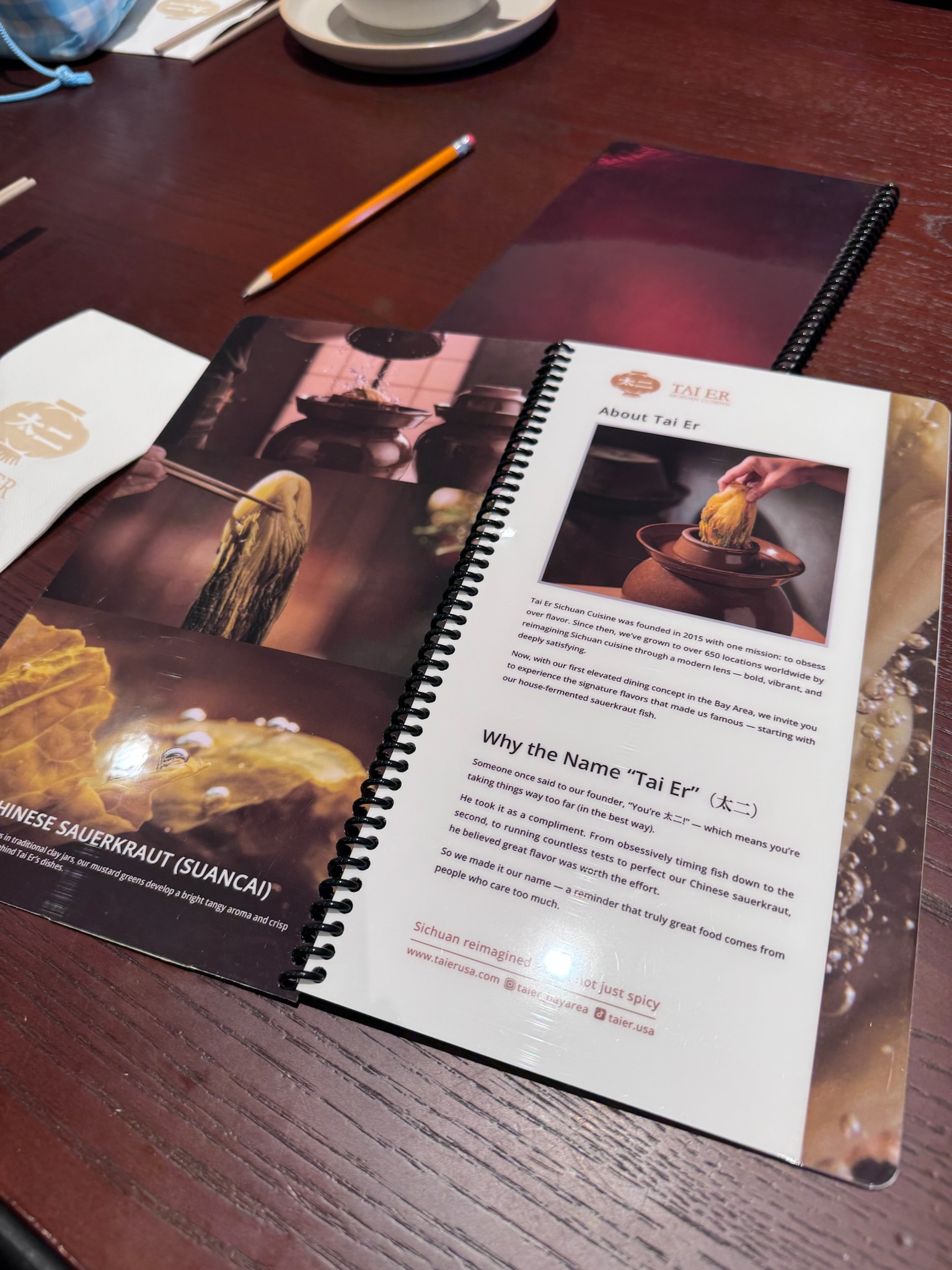
The dining room is more refined than I expected from a chain. Dark wood, warm lighting, considered tableware — closer to a polished Chinese restaurant in Shanghai than to a strip-mall Sichuan spot in the Bay Area. The menu itself is a heavy bound book with full-page photography and origin stories on the back of each section. Whoever designed this clearly cares about presentation.
The menu also makes the case for the cuisine in English — small but useful for diners who haven’t grown up with this style. The note on Chinese sauerkraut (suancai) — mustard greens fermented for 23 days to develop tang, salt, and depth — primes you for the signature dish before you order it.
The Sauerkraut Fish
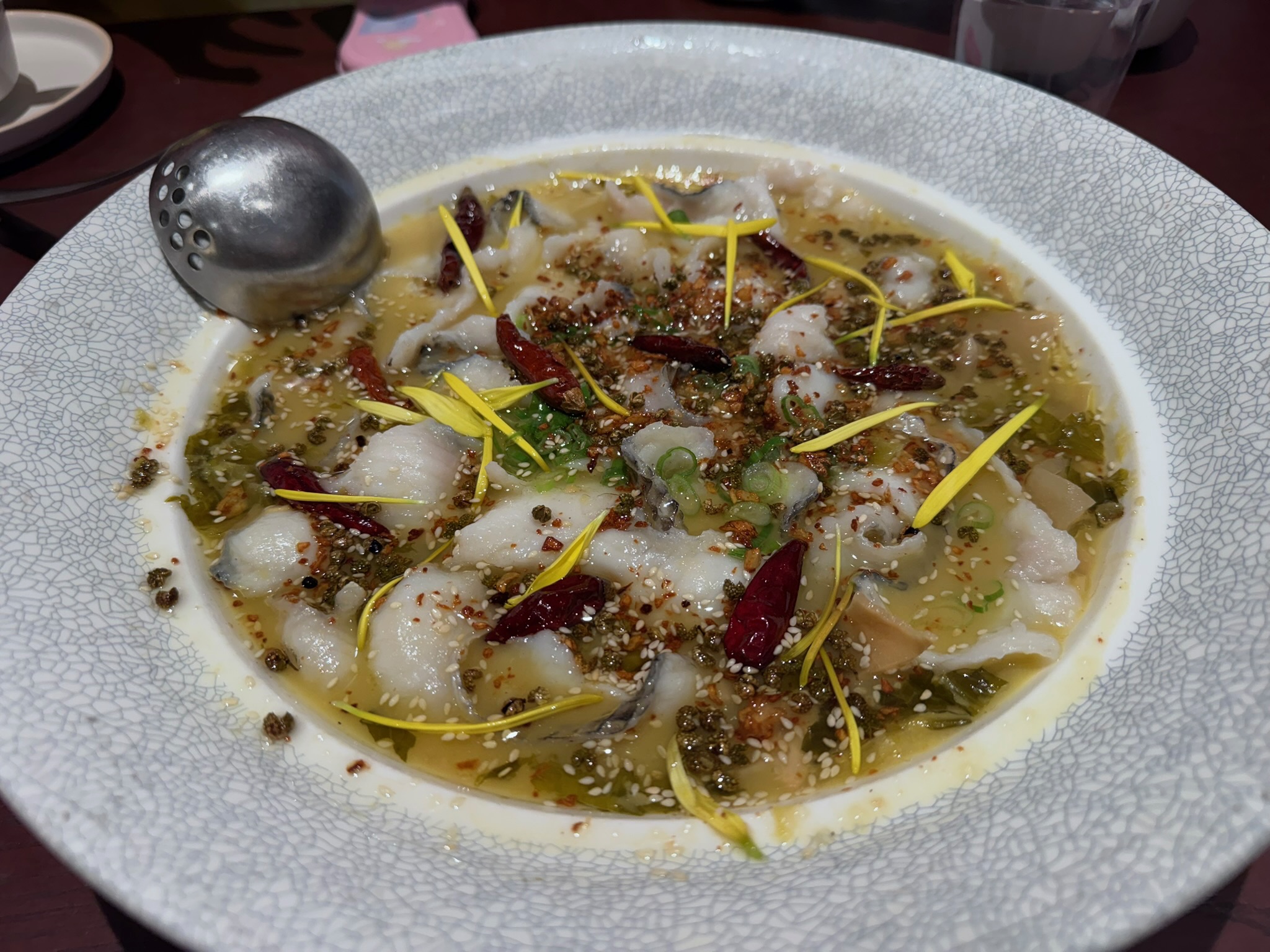
This is the dish to come for. Full stop.
The fish is snakehead — sliced thin and gently poached in a pork bone broth that’s been infused with the house-fermented sauerkraut. Snakehead (黑鱼, hēi yú) is the classic choice for this dish in China: a firm, lean, almost meaty white fish that holds its texture through a long simmer instead of falling apart the way tilapia or basa would. Most Sichuan places in the U.S. don’t bother sourcing it. Tai Er does.
The colour of the dish is striking — a clear yellow broth with vivid green pickled mustard, dark red dried chilies, and small yellow chrysanthemum petals scattered across the top. Sesame seeds float at the edges.
The flavour is the thing. Tangy from the fermented greens, savoury from the pork bone broth, with a slow building heat that doesn’t overwhelm. The fish is silky and slips off the chopsticks. The pickled mustard pieces give you bursts of acidity that cut through the richness. It’s a dish that genuinely earns its reputation.
I’ve had sauerkraut fish at Suji in Indonesia and at a few Sichuan places in the Bay Area. The San Mateo version is the closest I’ve eaten to what you’d get in China — the fermentation has the right depth, the broth has the right balance, and the fish is treated with the kind of care that the menu copy says it deserves. Suji is good in its own way, and Wei Fish and Yao Yao are decent. This is on a different level.
Two notes:
- You can choose the spice level (Non-spicy, Mild, Spicy). I went mild and it was perfect — enough heat to feel it, not enough to bury the fish flavour.
- At $45, it’s not cheap by Bay Area Chinese-restaurant standards, but you get a generous portion that feeds two comfortably with sides.
The Chili Chicken
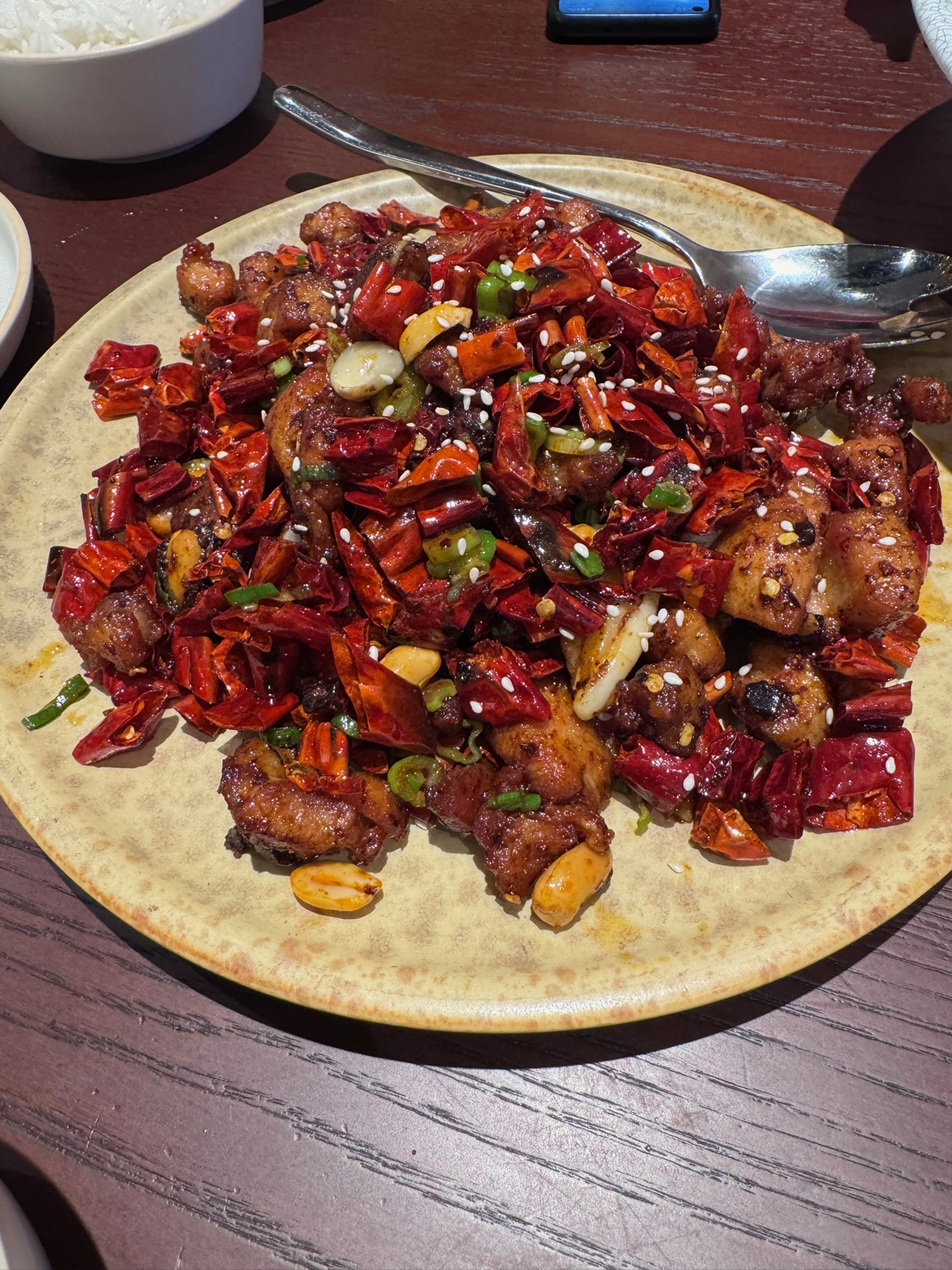
We also ordered the chili chicken — the classic Chongqing-style dish where you have to dig through a mountain of dried chilies to find the actual chicken pieces. Tai Er’s version is well-executed: crispy outside, juicy inside, with the toasted-chili aroma that’s the whole point of this dish.
It’s spicier than the sauerkraut fish (obviously), but again — controlled, not punishing. The numbing tingle from the Sichuan peppercorns is there if you know what to look for. If you’ve eaten this dish at Z&Y in San Francisco or at Spicy King, this is in the same conversation.
The Menu
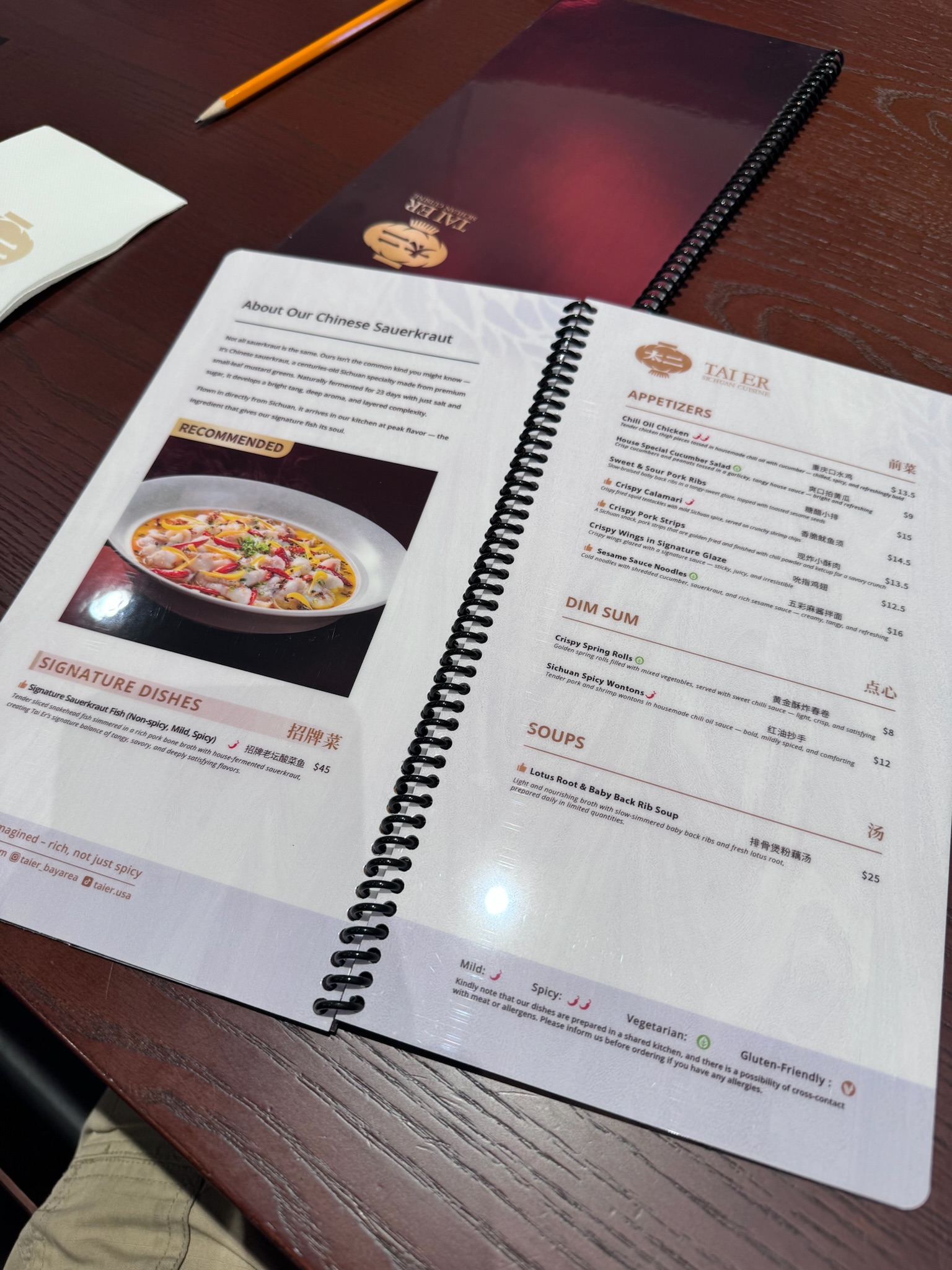
The rest of the menu is worth scanning. The appetizer section alone has dishes I want to come back for:
- Sesame Sauce Noodles ($13.5) — cold Sichuan-style noodles with the iconic sesame paste dressing
- Sichuan Spicy Wontons ($16) — wontons in chili oil, listed as a recommended dim sum
- Crispy Wings in Signature Glaze ($14.5) — looks like the kind of sticky-sweet-spicy combination that’s hard to mess up
- Chili Oil Chicken — Sichuan cold platter classic
Plus the Lotus Root & Baby Back Rib Soup ($25) for those who want a calmer, more nourishing dish.
This is not a one-trick restaurant. The sauerkraut fish is the headline, but the supporting cast looks genuinely strong.
The Kid’s Meal
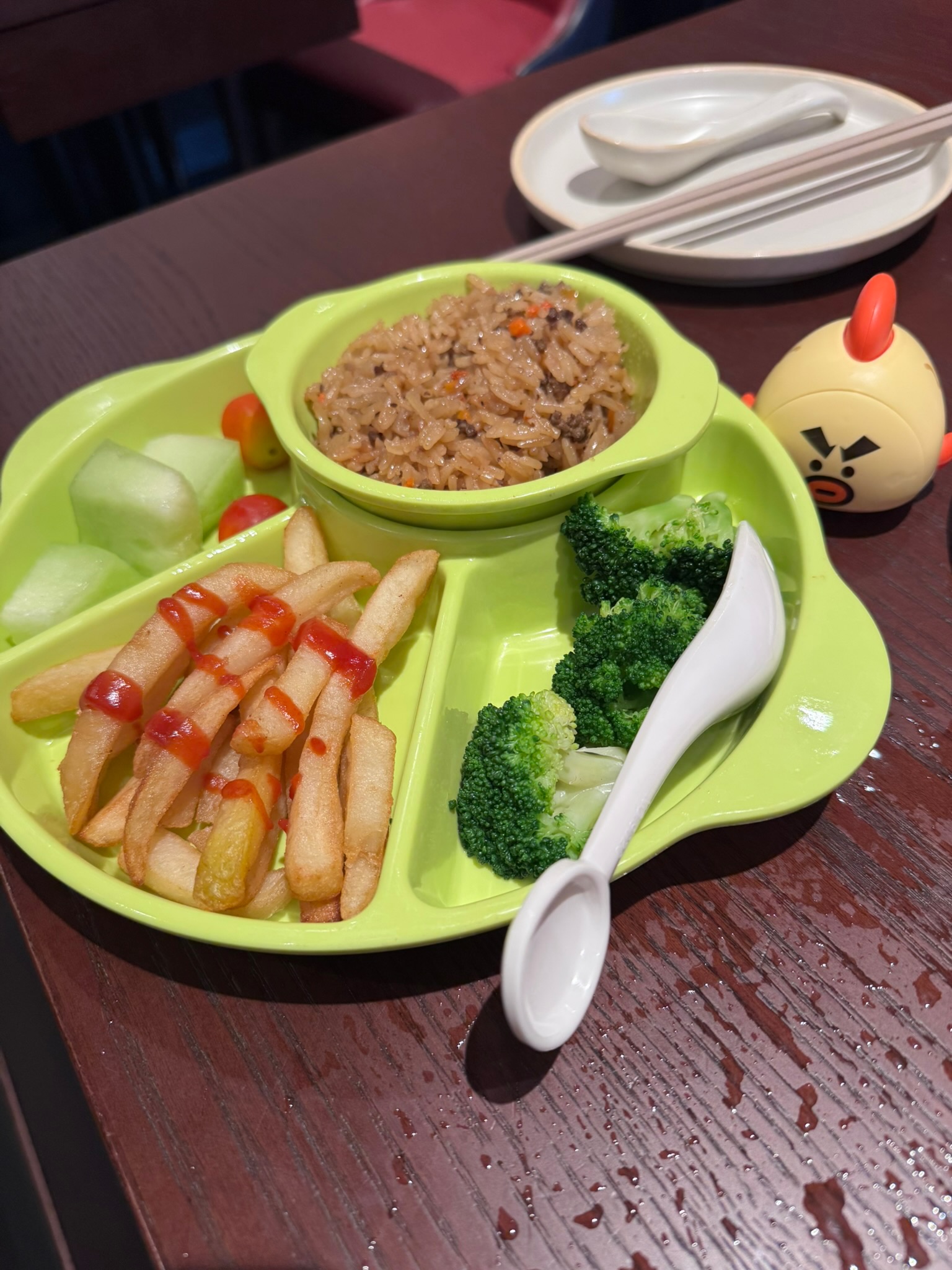
A small but charming detail: the kid’s meal comes on a green frog-shaped plate with fries, broccoli, fried rice, fruit, and even a little chick-shaped toy to keep the kid entertained between bites. It’s the kind of touch a corporate American chain would never bother with, and a hint at how much thought went into the rest of the operation.
It’s also genuinely affordable — priced more like a side dish than a full kids’ menu add-on. If you’re bringing kids, this matters.
Leftovers, and the Packaging
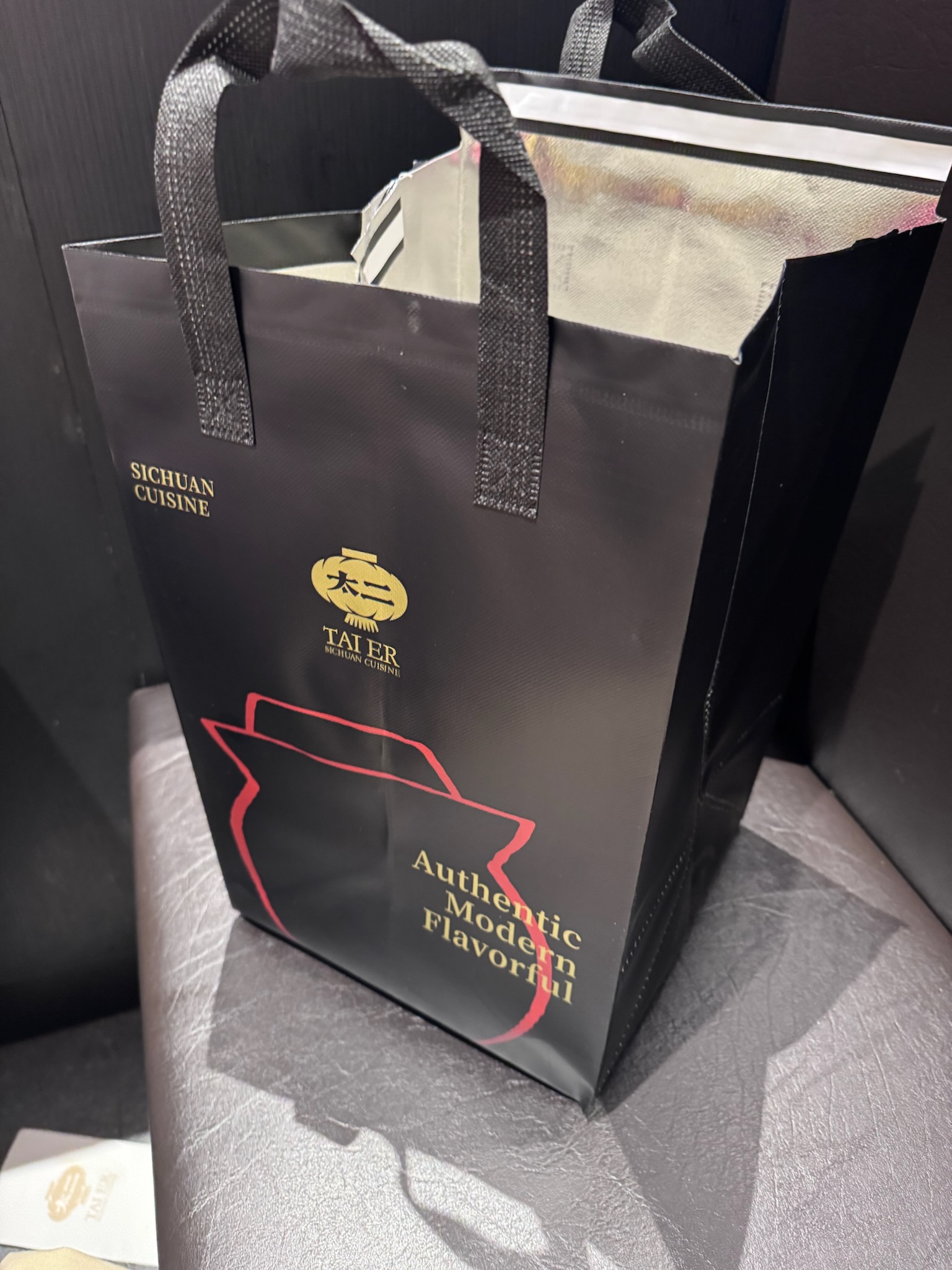
We took leftovers home in this branded insulated bag — and I have to call it out, because the packaging at Tai Er is at a different level from anything else I’ve seen at a Chinese restaurant in the Bay Area. Heavyweight black canvas, gold foil printing, properly sealed thermal lining inside. It feels like takeout from a luxury hotel, not from a Sichuan spot. Most places hand you leftovers in a flimsy plastic bag and call it a day.
The fish itself reheats surprisingly well — the broth and pickled greens preserved most of their character through a microwave reheat the next day. Not Day 1 quality, but better than I expected.
The Verdict
Score: 9.0 / 10 — Tai Er is the best Sichuan restaurant I’ve eaten at in the Bay Area. It’s not even close. The sauerkraut fish is better than what I’ve had at Wei Fish or Yao Yao. The space, the menu design, the packaging, the kid’s meal — every detail signals a level of care that most Chinese restaurants in this market don’t even attempt.
What keeps it from a perfect score is the pricing curve. $45 for the signature fish and the general dim-sum-and-appetizer pricing put this in the “special occasion Chinese” category rather than the “weekly neighbourhood spot” category. That’s a deliberate positioning — this is meant to be the elevated end of the chain — but it means you’re not coming here on a Tuesday.
If you can get a reservation, take it. Whether it’s the new Valley Fair location or this San Mateo one, this is worth the trip.
Tai Er Sichuan Cuisine — San Mateo First U.S. location of the Tai Er (太二) chain, founded in 2015 in Guangzhou. Known for the suancai yu (sauerkraut fish) recipe.