United Domestic vs International Business: A Tale of Two Cabins
There’s a phrase you hear a lot in the points-and-miles world: “all business class is not created equal.” I’d nodded along with it for years without really knowing what it meant. Then, within the span of a few weeks, I happened to fly United’s domestic Business Class on one trip and the international Business Class on another. The same airline. The same brand. Two products that share almost nothing in common.
Here’s how they actually compare.
The Domestic Cabin
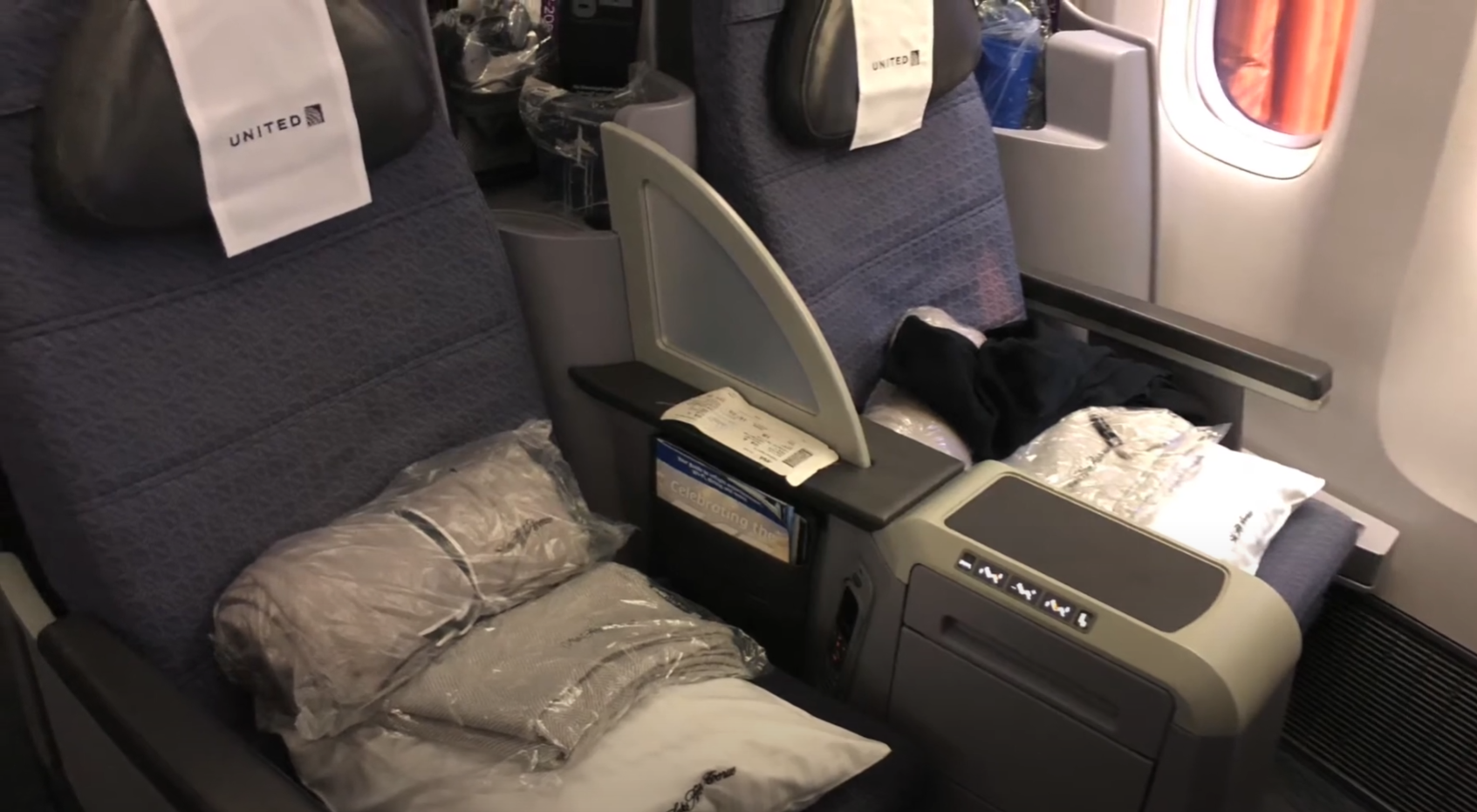
I was upgraded to domestic Business Class as a Marriott Bonvoy and United Premier Elite member — the sort of perk you stop expecting and then enjoy when it arrives. The seats were spacious, the legroom was generous, and the pillow-and-blanket setup was waiting on the seat. Everything as advertised.
But there’s a key thing to understand about US domestic Business Class: it’s essentially a slightly nicer version of an economy seat with a meal. There’s no lie-flat bed, no enclosed suite, no real privacy. On the right transcontinental routes (JFK–LAX, JFK–SFO), United’s “Polaris” or premium transcontinental seats can offer something more interesting. But on most domestic flights, what you’re getting is a recliner with extra width.
The Domestic Meal
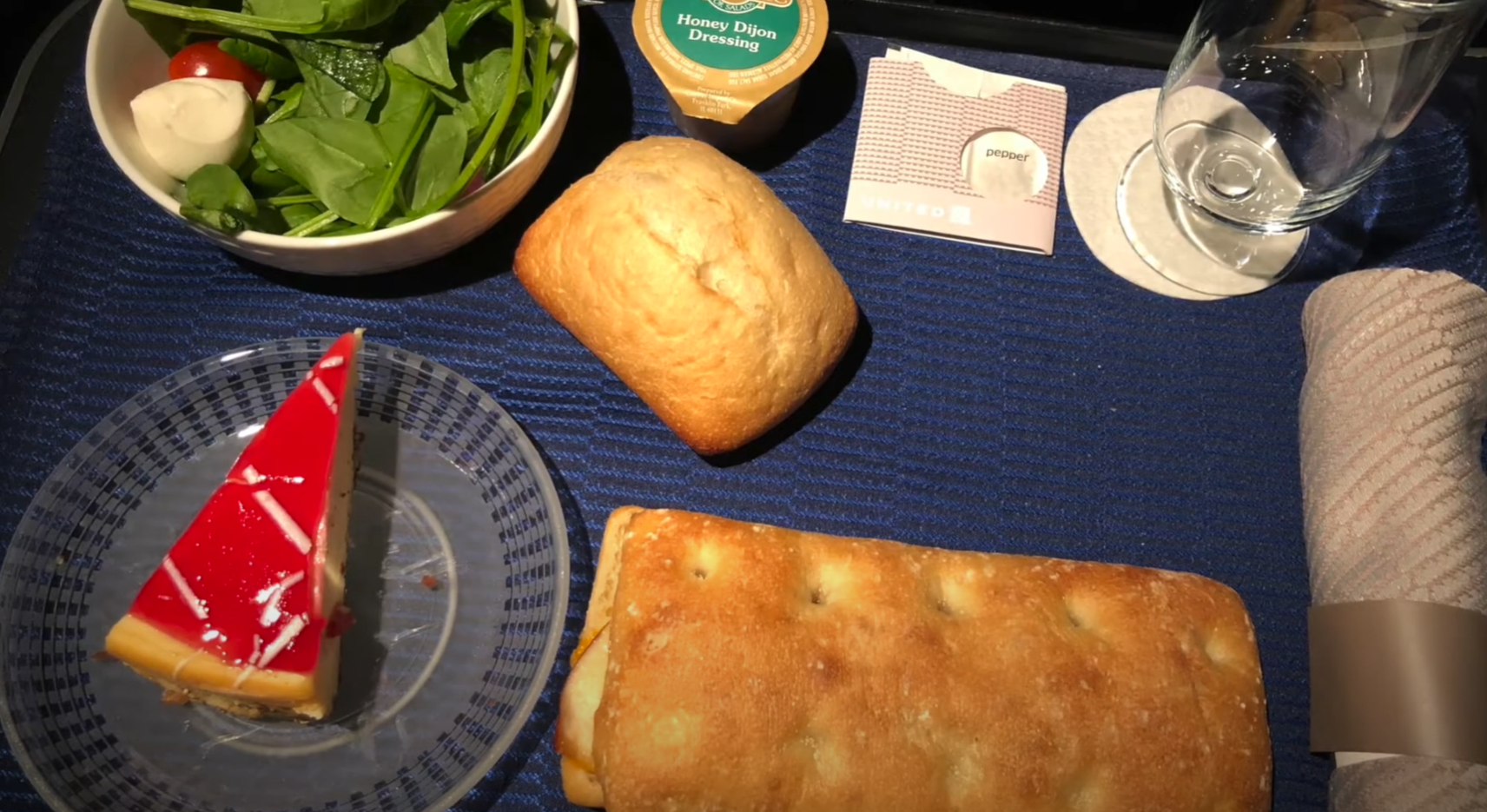
The meal was perfectly fine. A green salad with cherry tomato and mozzarella, a sealed packet of honey dijon dressing, a soft dinner roll, a wrapped sandwich, and a slice of glazed cheesecake. Cold service, pre-portioned, served on a tray.
Nothing wrong with any of it. Nothing memorable about any of it either. This is the kind of meal that exists primarily so the airline can say there was a meal — adequate, edible, forgettable.
The flight attendants were polite and efficient. The whole experience was perfectly serviceable.
That’s about all I can say about it.
A Different Airline Entirely: The Lounge in Narita
A few weeks later, I was at the United Club at Narita Airport in Japan, waiting to board an international Business Class flight back to the US.
The contrast started in the lounge.

The Narita United Club is a different beast from any domestic United Club I’ve used. Made-to-order sushi, an extensive Japanese hot bar, proper coffee, and the kind of food selection where you have to actively pace yourself to avoid arriving on the plane already full. The plate above — maki, inari, and tamagoyaki — was a small sample of what was on offer.
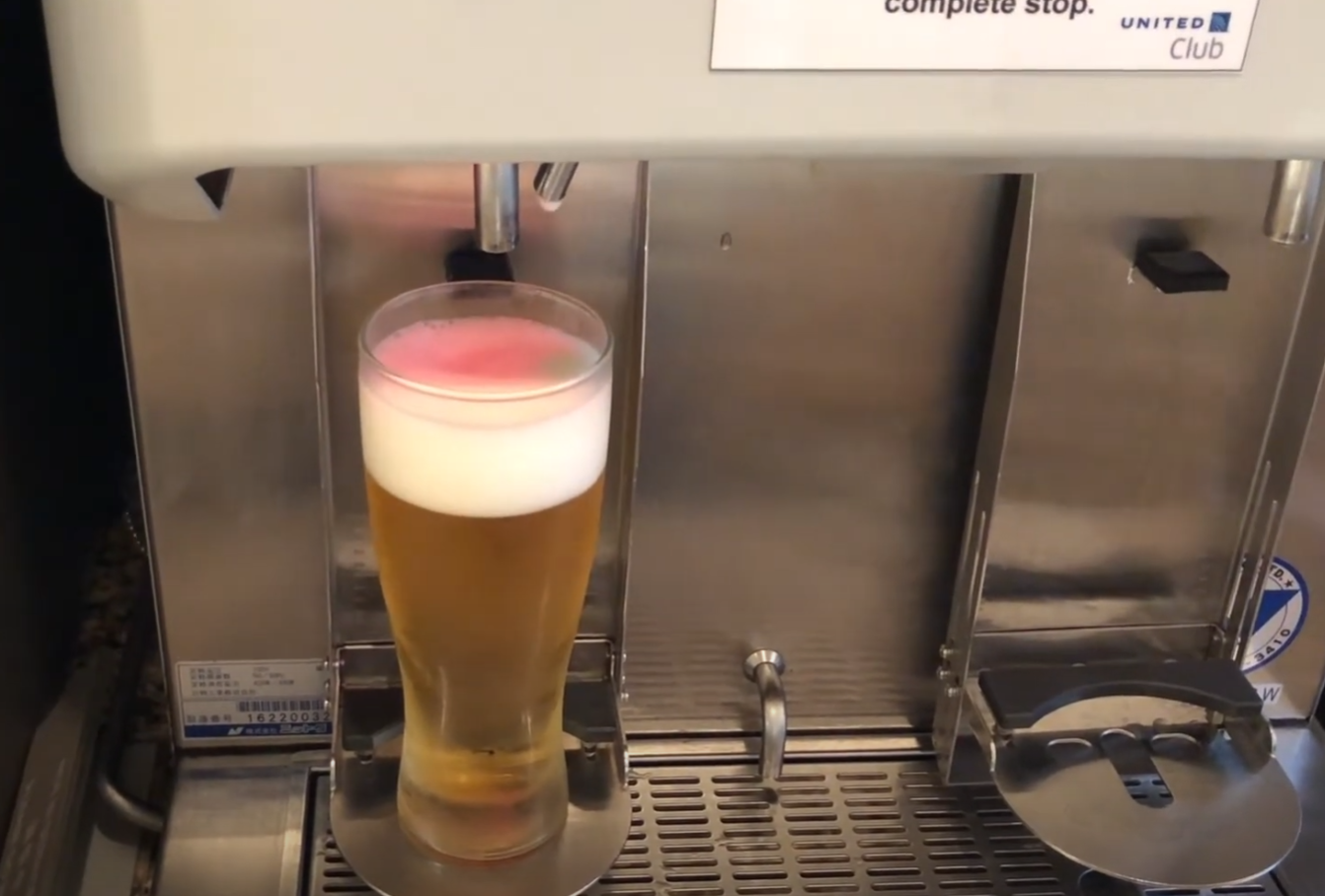
But the standout — and the small detail I’ll always remember — was the self-pour Asahi beer dispenser. You place a glass underneath, press a button, and a perfectly poured beer with a properly foamed head appears. I’m not really a beer person, but I had to try it just for the novelty of it. It’s the kind of touch that signals: this lounge takes itself seriously.
The International Flight
Boarding for international Business Class is its own little luxury — a dedicated lane, no jostling, your own slow walk down the jet bridge while the rest of the plane queues behind you.
The seat was the real moment, though. International Business is a different category of product entirely from domestic. You get a proper lie-flat bed, considerable storage, a full amenity kit (toothbrush, socks, sleeping eye mask, the lot), noise-cancelling headphones, and the kind of cabin layout that gives you a real sense of personal space.
The food was the bigger surprise. Where the domestic meal was a perfunctory tray, the international service was a multi-course Japanese washoku menu — clean, seasonal, properly cooked. The fish was perfectly poached, the miso soup deep and savoury, fresh fruit on the side. Dessert was an ice cream with strawberry and almond — the kind of small, considered ending that would feel at home in a hotel restaurant.
Service was attentive but unobtrusive. The crew clearly understood what business class is supposed to mean, and they delivered.
The Bottom Line
Here’s the honest comparison, side by side:
| Feature | Domestic Business | International Business |
|---|---|---|
| Seat | Wide recliner | Lie-flat bed |
| Meal | Salad, sandwich, cheesecake | Multi-course Japanese washoku |
| Lounge | Standard United Club | Narita Club with sushi, hot bar, Asahi tap |
| Amenity kit | None | Full kit (toothbrush, eye mask, socks) |
| Boarding | Standard priority | Dedicated lane |
| Memorable? | Not particularly | Genuinely so |
The domestic flight is a perfectly fine way to fly. It’s better than economy. The legroom alone justifies an upgrade if you can get it.
But it’s worth understanding that “Business Class” on United is essentially two completely different products depending on whether you’re flying within the US or across an ocean. If you’ve only flown the domestic version, the international product will surprise you. If you’ve only flown the international version, don’t expect the same when you book a domestic Business ticket — you won’t get it.
For long-haul, the international Business is genuinely worth booking, especially on points. For short-haul, an upgrade is welcome but not life-changing. Plan accordingly.